Originally published on Thrillist.com.
I’m trying to meditate, yet all I can hear is humming. That’s because I just stuck my head inside a beehive.
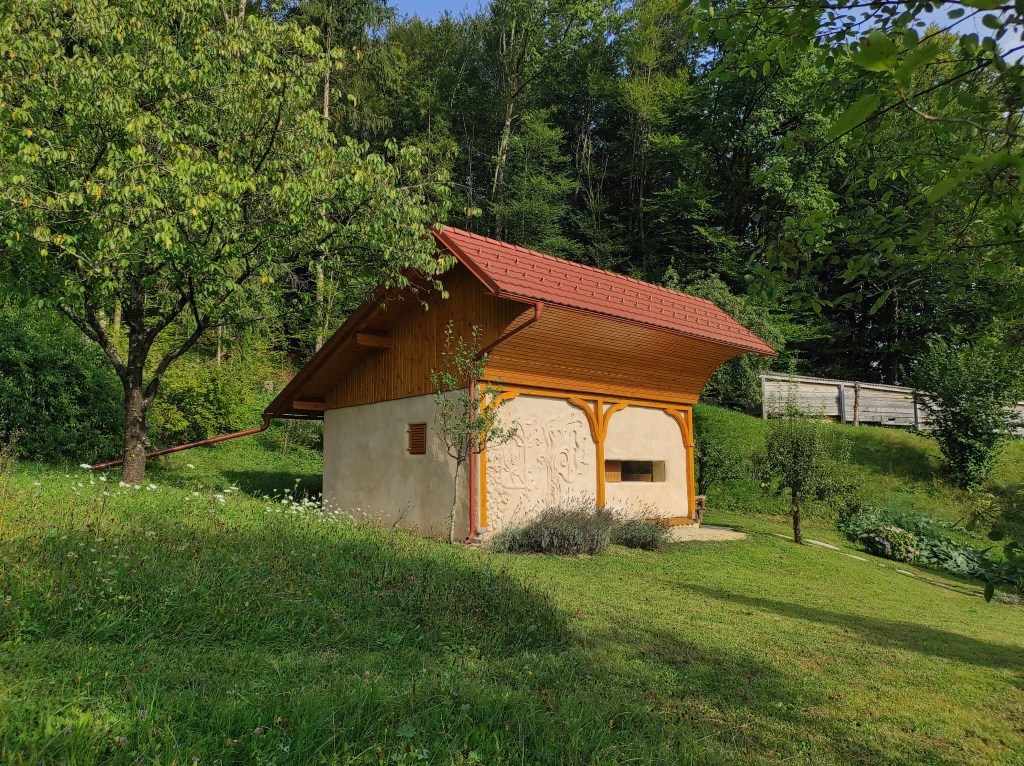
I’m at the wooden cabin I rented in the Slovenian hills, a 30-minute drive from the capital of Ljubljana, for a mini relaxation retreat with a focus on apitherapy, or bee therapy. As someone who suffers from anxiety, I am always interested in wellness and meditation trends, and have tried everything from gong baths to ecstatic dance. As soon as I heard of bee therapy, I was eager to give it a go—and this cabin, owned by soft-spoken apiculturist Andrej Trontelj, was the perfect place to do so.
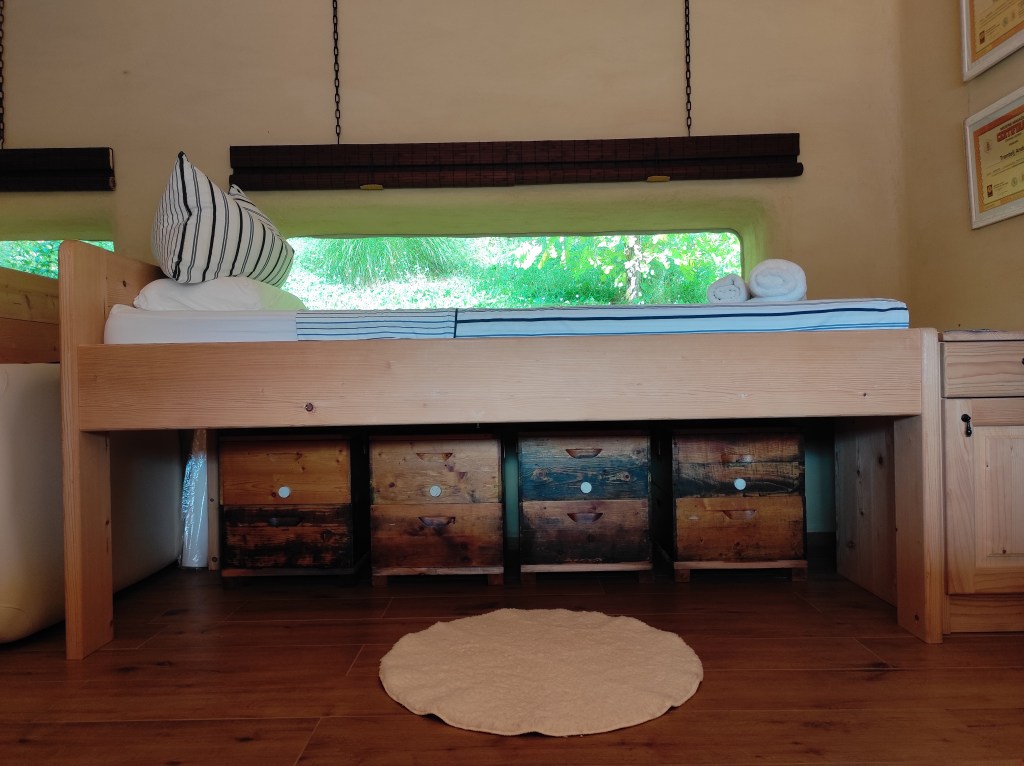
Beehives are built into the clay walls of the hut, so visitors share a bedroom with wooden boxes that buzz and emit a richly sweet smell, like a blend of honey and freshly cut grass. There are hives under the bed, too, with wire mesh to allow visitors to share the air from the hive, although the bees can’t actually get inside the hut. Through the windows, thousands of bees swarm around the cabin in thick clouds.
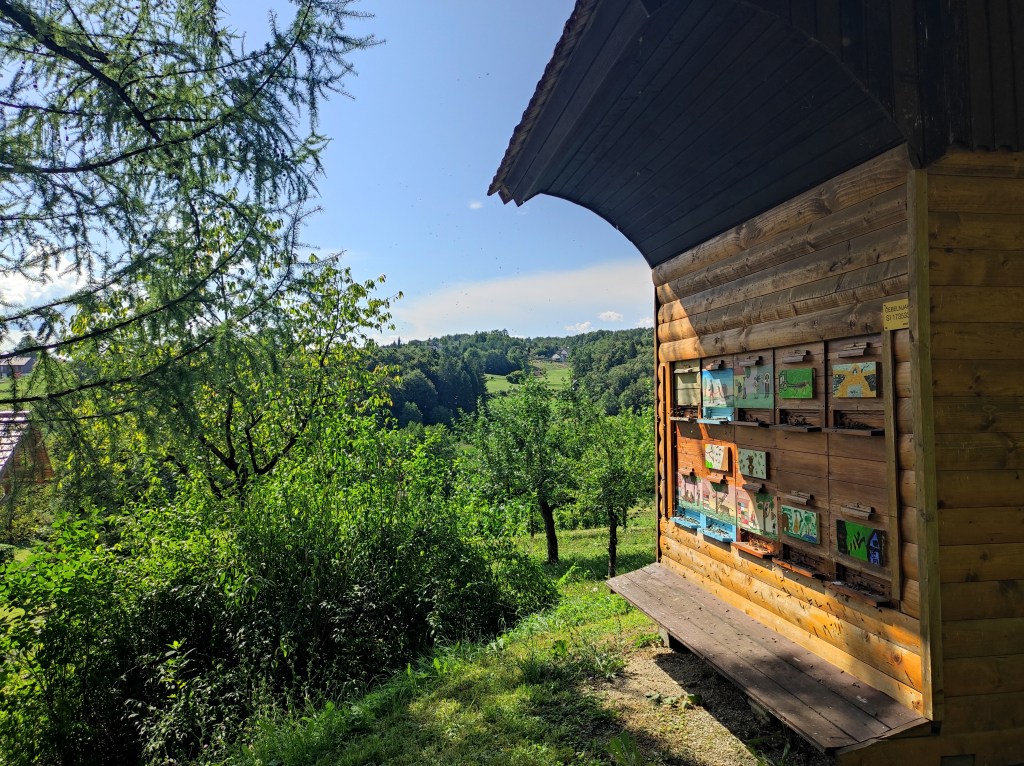
“My family has always been beekeepers,” explains Trontelj. “My grandad would sleep in the beehouse when his kids were too noisy. I think that is where I got the idea!”
Trontelj built the cabin himself in 2020 during the COVID pandemic and started renting it out in 2021. Alongside the accommodation, he also offers honey massages, food, and cosmetics made from bee products, and aerosol breathing masks linked directly to the beehives.
But Trontelj isn’t the only Slovenian to take part in bee tourism; the country is actively promoting what it calls “honey wellness,” part of several initiatives to promote beekeeping in the area. Slovenia was even behind the UN initiative to create a World Bee Day in 2017. And thanks to these initiatives, while many countries are facing a decline in the number of bees, Slovenia’s numbers are actually growing. There are a number of cabins like Trontelj’s sprinkled throughout the country, where curious travelers can partake in apitherapy.
During my stay, I give the aerosol breathing masks a try, sinking into a wooden chair and inhaling the air from the hives. There’s something about it that feels different from breathing normal air, a satisfying, luxurious, yet wholesome quality that makes me feel like I just had a cold glass of water after a hike, or am sitting by a fireplace on a winter’s day. I slip into a deep relaxation.
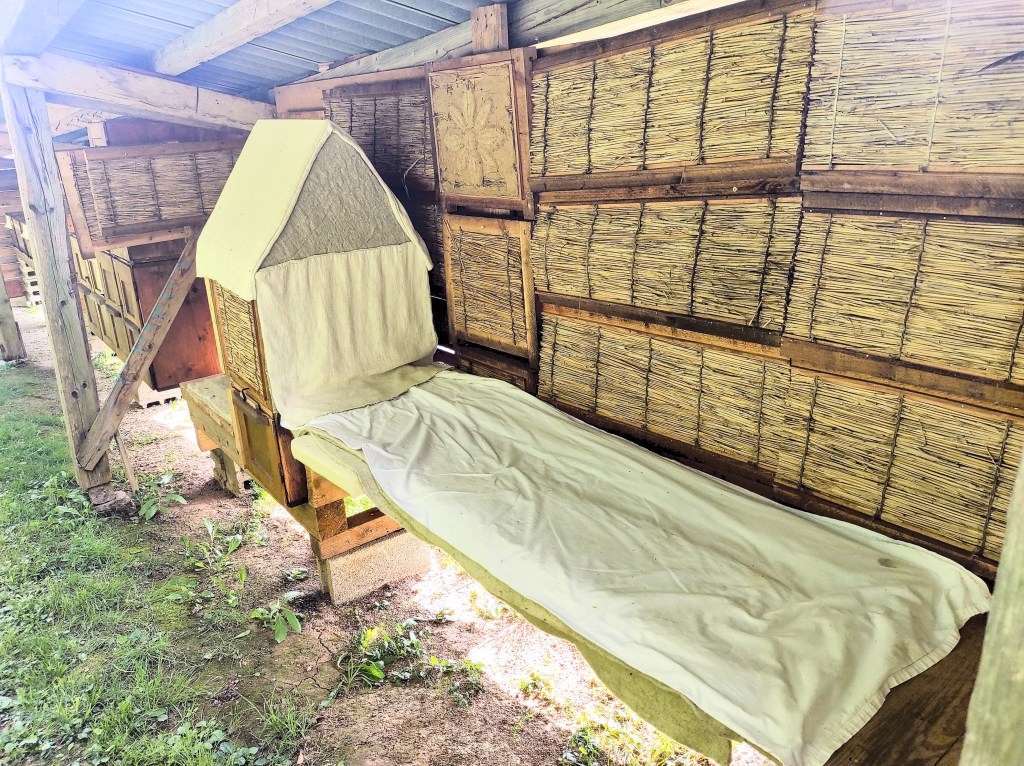
As for sticking my head into a beehive? Trontelj has a contraption to help with that too: a metal mesh box inserted into the hive that allows visitors like me to safely watch the creatures build their honeycombs, or just relax and listen to the workers hum.
Trontelj firmly believes in the healing power of bees. He spent a year studying apitherapy, or the use of bee products for medicinal and therapeutic purposes, in the nearby city of Maribor. And apitherapy has existed for millennia. The Romans used honey to treat wounds, and the prophet Muhammed recommended the use of honey for stomach issues. Bee venom has long been used in Ayurvedic medicine to treat arthritis and skin conditions. Studies have also shown that bee venom, honey, royal jelly, and propolis have anti-inflammatory, anti-bacterial, and anticancer effects.
There is less scientific evidence for the specific benefits of beehive aerosols or meditation. However, beekeeping has proven benefits for mental health, and there’s certainly anecdotal evidence that the buzzing sounds are soothing to the mind. Another benefit, I find, is simply feeling close to the bees. We know how important they are to our ecosystem, but we don’t often get a chance to interact with them—and this act of biophilia, or loving and connecting with the natural world, feels good.
“Bee therapy has always helped me,” says Trontelj. “It is a way to venerate your body. Bees do miracles.”
Bee therapy might be helping me, too. I feel relaxed as I emerge from my meditation session in the beehive. I settle down in the shared kitchen area with a book, and Trontelj hands me a glass of homemade honey liquor. “You can drink as much as you like. When you sleep in the beehouse, you’ll never get a hangover,” he promises. “The bees will help you.” The drink is rich and silky, with floral flavors that evolve with each sip.
I am pleasantly tipsy when I go to my cabin and climb into bed. There is a storm outside, and the bees have retreated into the hives beneath me, making the cabin especially noisy. It’s oddly comforting to hear the thunder outside and the bees buzzing below. I go to sleep, my body content after a long day, which is itself a small miracle.
 Shortcuts and Side Quests
Leave a comment