Originally published in Wired for Adventure – Buy the full issue here!
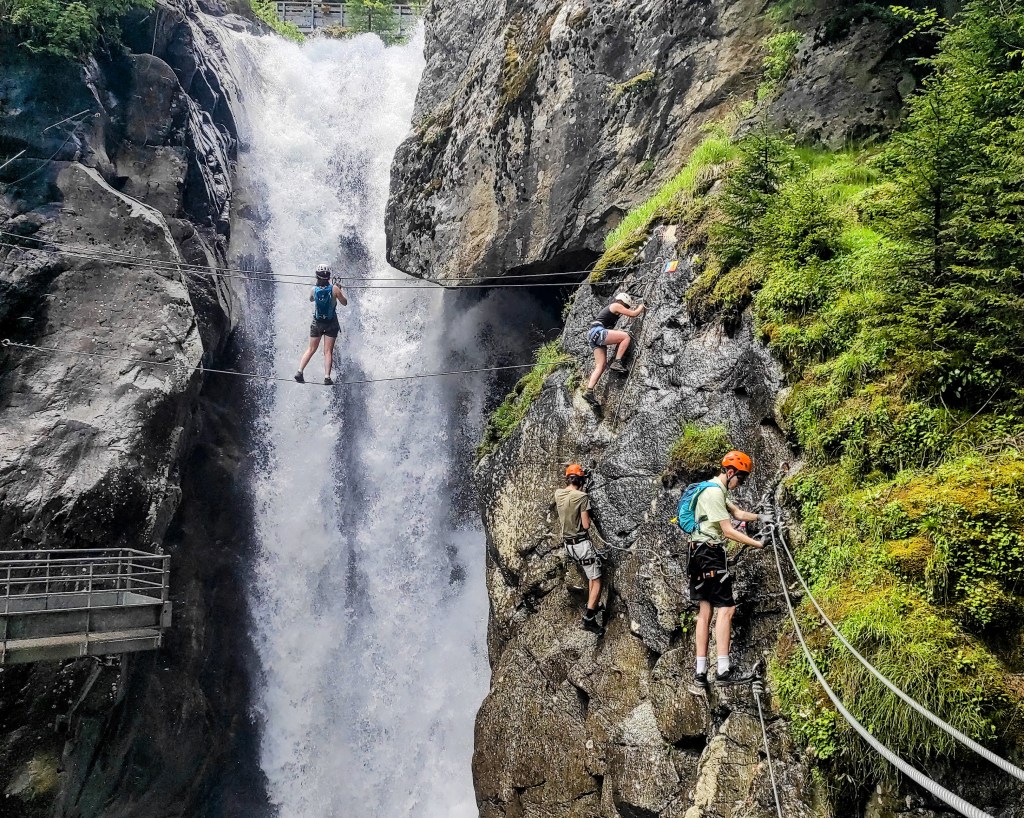
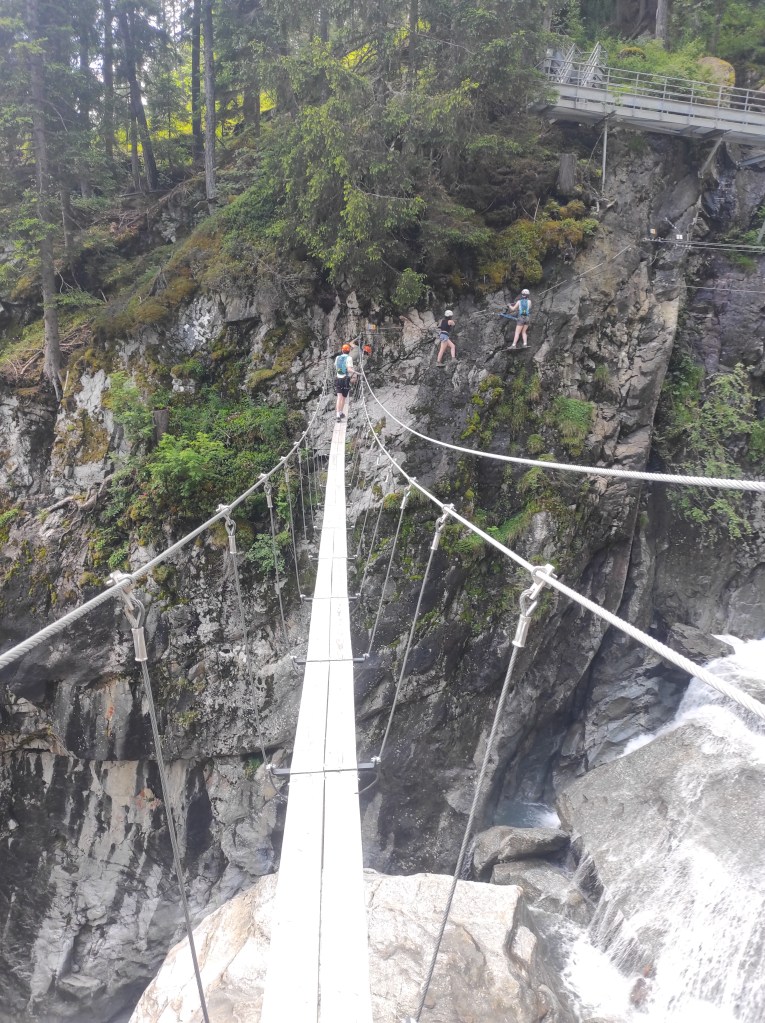
I’m only a few minutes into the via ferrata when I find myself staring down into a sheer drop. The next stage of the route is a suspension bridge, consisting of nothing more than a narrow cable for my feet, and two more at chest height for my harness to clip onto.
It’s too late to turn back. I clip one carabiner onto the cable. Then the other. I start inching forward, gripping the tightrope with the arch of my foot. Halfway through, one foot almost slides off. The wires are slippery with spray from the roaring river below. Jagged rocks poke up threateningly. I regain my balance and keep going.
After years of longing, I’m finally doing my first via ferrata. The concept has always appealed to me – a pre-built climbing route that takes you up steep mountain routes, with the help of ladders, metal rungs, and bridges. All you need is some basic equipment and a cool head.
Of course, cool is not a word that is often used to describe me, nor my head.
Why am I doing this? I wonder as I step off the suspension bridge onto the safety of the other side. What happened to my nice indoor hobbies? Remember when I used to crochet? Those were good times. Mum loved those times.
I shake myself. Sure, this is scary, but that’s no reason to start agreeing with my mother. I move my carabiners along to the next cable and keep climbing.
What is a Via Ferrata?
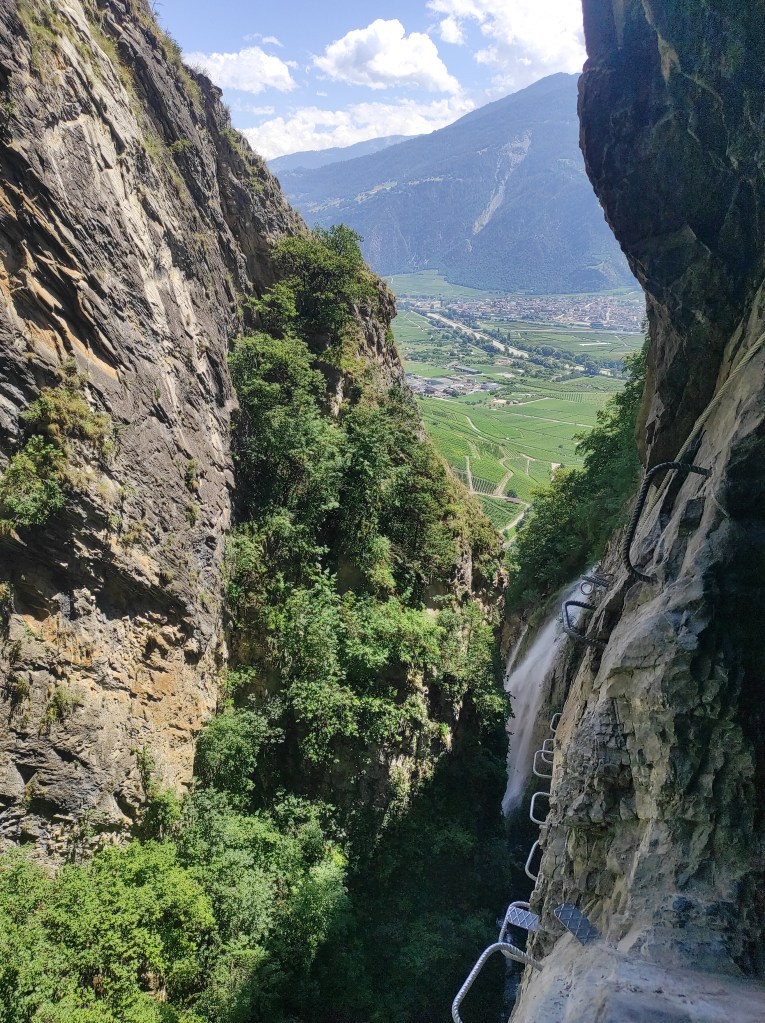
Via ferratas – Italian for iron paths – are climbing routes equipped with fixed cables, metal rungs, and ladders. Some include obstacles such as ziplines, suspension bridges, balance beams, or nets. You’re clipped to a safety cable, so you’re always protected from falling.
This system works just like the ones used in treetop adventure courses. You’ll have two carabiners, and at all times, at least one of them will stay clipped to the safety cable. When you need to move to a new section of the cable, you unclip one carabiner and attach it to the next section. Once it’s securely clipped, you can then move the second carabiner over. This way, you’re always secured.
You can picture Via Ferrata as a cross between hiking and climbing – steeper terrain than any hiking trail, but less technical than rock climbing. There is no belaying. You don’t need any rope skills or to find your own holds.
You can find these routes throughout Europe, particularly in Switzerland, France, and Italy. Anyone can do one – as long as they are physically fit and can handle heights. That being said, there are different levels of difficulty. Routes are graded A (easiest) to E or F (extremely difficult). Routes graded E or F include challenging passages, requiring a lot of upper-body strength and mental resilience.
A Brief History of Via Ferrata
Interestingly, the first via ferrata were not built for fun. They were created in the Dolomites in the First World War to transport soldiers, munitions, and weapons up the mountains. The warring Italian and Austro-Hungarian armies built around 100 routes.
In the 1930s, the Italian Alpine Club decided to restore the routes for recreational use. In the 1980s, when rock climbing was becoming more popular, via ferrata also took off. Routes were created across Europe before spreading to the US, Canada, and New Zealand in the 90s and 00s. The first route was built in the UK in 2000 at Honister Slate Mine in Cumbria.
The route I take for my first time, the Via Farinetta in Valais, Switzerland, doesn’t date back to World War One, but it does have its own interesting history. At one point, you enter a tunnel through the cliff, following an old bisse, or irrigation channel. The passage had been hewn into the rock several centuries ago to ferry water from the mountaintops to the vineyard-covered valley.
What Gear Do You Need for Via Ferrata?
Compared to rock climbing, Via Ferrata doesn’t require much gear. The most important piece of equipment is the via ferrata lanyard: a Y-shaped system with two carabiners and an energy absorber. If you fall, the energy absorber deploys, softening the “yoink” feeling that is both unpleasant and potentially harmful for your body. Once the absorber has been deployed in a fall, the lanyard needs to be replaced.
Other than the lanyard, you’ll need a climbing harness and a helmet. Gloves are recommended to prevent your hands from getting cut up by the rough surfaces of the rocks and metal holds. You also need hiking shoes with a good grip.
One optional but very useful piece of gear is a rest sling – a short loop of webbing with a carabiner, that you attach to your harness. It lets you clip into a hold, put your full weight on the sling, and take a break. It is particularly useful on more challenging routes. I regretted not bringing one on my first via ferrata—the final section had several overhangs that quickly drained my upper body strength. By the time I reached the top, my arms were shaking like jelly, and the only thing keeping me going was adrenaline.
In the UK, most routes are privately owned. You go with a guide, and equipment is provided. In Europe however, most via ferrata routes are unmanned. You’ll need to bring your own gear, as there are no on-site rental options. However, you can usually rent a full set-up in nearby mountain towns or buy your own from specialist climbing or outdoor shops.
Why Do a Via Ferrata?
The first reason to do a via ferrata is that the process itself is fun. You climb from one hold to the next, scramble up ladders, and cross suspension bridges. It feels like an obstacle course, set up on a rock face.
But the biggest drawcard of via ferrata is that they allow you to access terrain that you wouldn’t be able to get to without extensive climbing skills. They are often built along sheer mountain traverses, up waterfalls, or through narrow gorges.
The Via Farinetta, for example, climbs through a narrow gorge before cutting across a cliff face, with views over the valley. It takes you along scary overhangs before climbing to the top of the cliff. The views from up there are spectacular (or mundane, by Swiss standards). You can watch other people completing the via ferrata, and feel pretty pleased with yourself for having climbed the impressive route!
Via ferrata is the perfect way to add some high-adrenaline thrills to your mountain holiday, without needing to take a course or hire a guide (although the latter is an option, if you would like).
Who Can Do a Via Ferrata?
Easy to moderate via ferrata routes can be tackled by anyone with a good level of fitness and a decent tolerance of heights. Many routes are even suitable for children—just be sure to check that the rungs and holds are within reach for shorter climbers.
When I did the Via Farinetta, I already had some basic climbing experience and rope skills. I’d also been on several treetop courses, where the double carabiner system is exactly the same. That said, I didn’t need those skills. If I hadn’t had them, though, I probably would have started with an easier route. The final section of Via Farinetta is rated a D, which means it’s quite challenging.
Via ferrata does require a basic fitness, but most of the time they aren’t intense in terms of cardio or strength. In fact, at one point, my Garmin had the audacity to start vibrating, telling me to get up and do some exercise. As I was dangling off a cliff, 50 metres in the air, I did not appreciate the advice.
Safety Tips for Via Ferrata
Despite their relative accessibility, you still have to be careful on Via Ferratas and make sure you’re not going out of your depth. Recently, some impressive via ferrata routes have been trending on social media, and people have been trying them without knowing what they were getting themselves in for. Rescue staff have reported a rise in cases of people getting into trouble and needing evacuation. Don’t be that person. Know your limits, and respect the route.
When I was on the Via Ferrata, I realized how easy it would be to get stuck. The terrain is so impressive, your lizard brain might just freeze when it realises how high off the ground you are. And the challenges aren’t just mental. Unclipping and reclipping your carabiners can be fiddly. You have to juggle slings, bolts, and cables, all while dangling off one arm. On the overhangs, this is particularly exhausting, and you can quickly find your energy drained.
If you do get stuck, there is no going back. Via ferratas are one-way systems. People might be coming up behind you, and going backwards puts them at risk, as well as you. Some via ferrata have escape routes to allow you to avoid sections that are particularly challenging.
To do a Via Ferrata safely, there are a few ground rules to bear in mind. Check your gear before starting. In particular, make sure that the energy absorber of your lanyard has not been deployed, as this means you need to replace it. Check the weather, and avoid going during the rain. Definitely never go during a storm, as the cables conduct lightning. Go with a partner if you are new to Via Ferratas, or consider hiring a guide if you are nervous.
On the route, you should always make sure to securely attach your carabiners. If the cable gets stuck in them, they might not close properly. Check this every time you move one carabiner forward, to make sure you are secured.
Respect signage and closures. If routes are closed, there might be a risk of falling rocks, or the rungs themselves may not be safe.
Lastly, start with easy routes and increase the difficulty gradually as you gain experience.
Ready to Give it a Go?
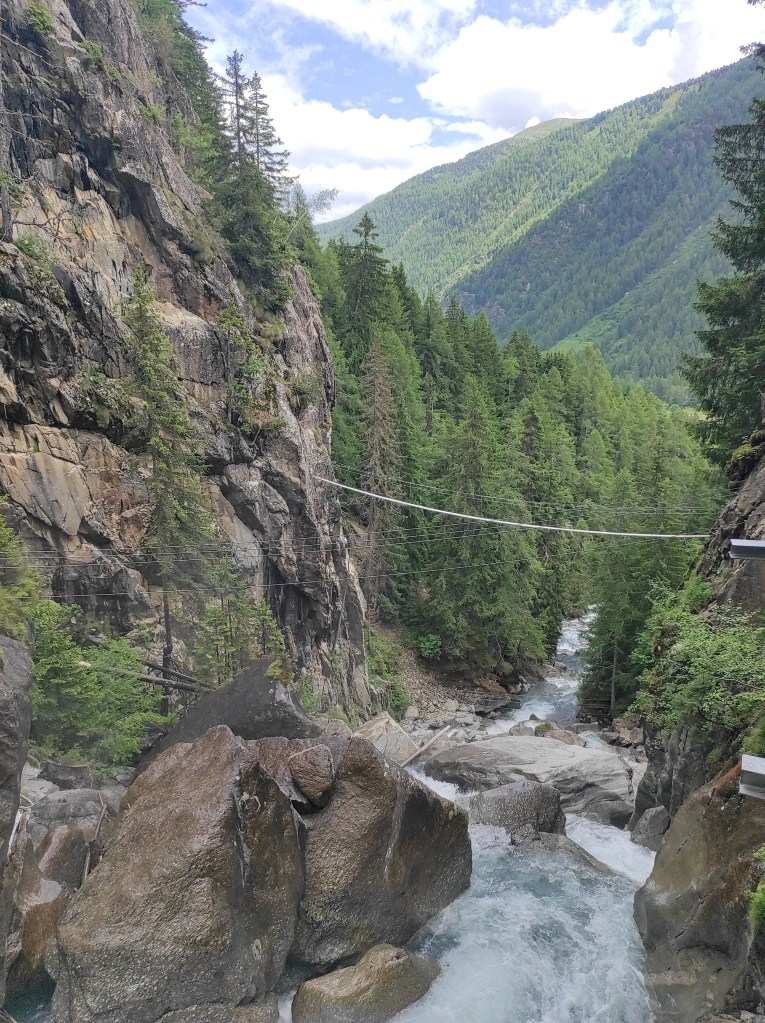
Via Ferratas are so much fun, and a great way to add some high-altitude thrills to any hiking holiday. If you’re ready to give it a go, there are several routes in the UK. At Honister Slate Mine in the Lake District, you can follow old miners’ tracks across the dramatic Honister Crag. Kinlochleven Via Ferrata, close to Fort William, runs up Scotland’s third-highest waterfall, while How Stean Gorge climbs the limestone cliffs of a narrow gorge in the Yorkshire Dales.
There are hundreds more routes across Europe, from the Dolomites to the French Alps. So next time you’re in the mountains, check the map. Gear up, clip on, and have fun.
 Shortcuts and Side Quests
Leave a comment