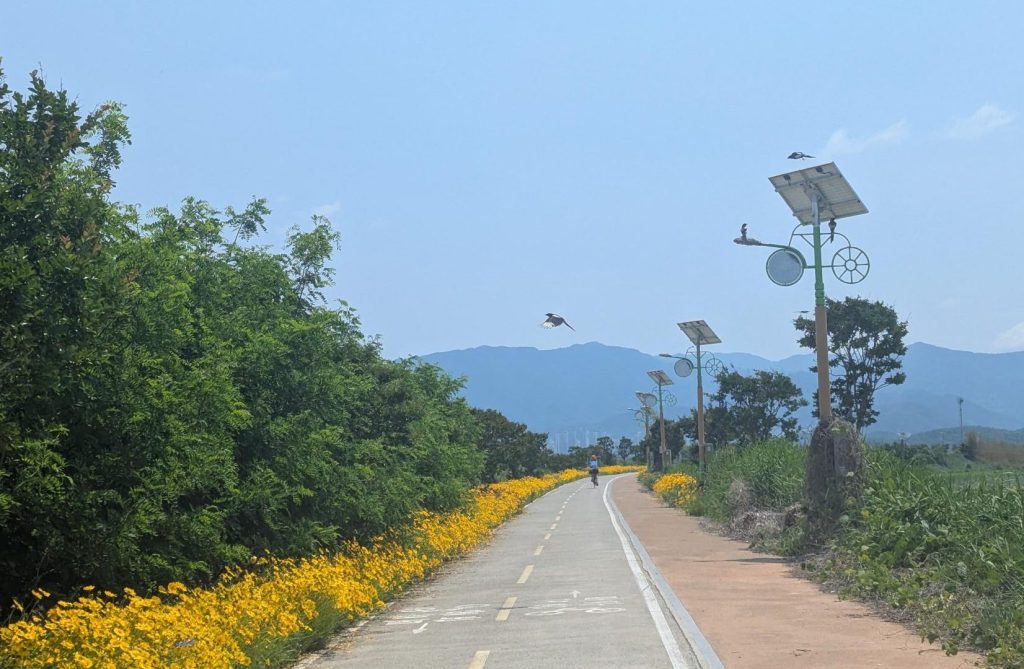
Did you know that you can cycle the entire way across South Korea? In fact, it is the best way to visit the country.
South Korea’s Cross-Country Bicycle Route stretches 633 kilometres from Incheon in the northwest to Busan on the southeast coast. A mixture of bike paths and quiet country roads takes the cyclist through some of the most surprising and rewarding parts of South Korea.
I spent a month cycling in Korea in May and found it to be an incredible introduction to a beautiful and diverse place. The futuristic skyline of Incheon gives way to Seoul’s riverside parks. Hot-spring-dotted mountains lead to the ancient Confucian city of Andong. You pass over riverside boardwalks and through fields of garlic and cabbage, before arriving at homestays serving homemade kimchi.
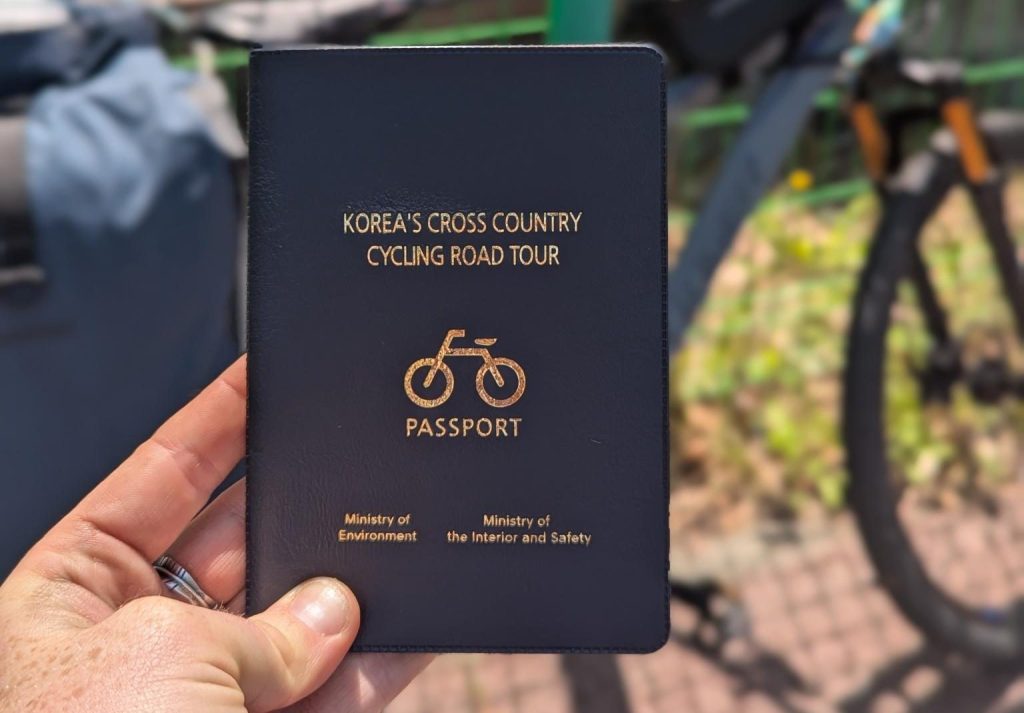
In true Korean fashion—with a dash of kitsch and an inclination towards overachievement— the route comes with a bike passport: collect stamps at red phone-box-style checkpoints along the way, and you’ll receive a medal at the end to mark your achievement.
Read on to find everything you need to know about exploring Korea by bike, the Seoul to Busan cycling route, and why you should give it a try.
Route Overview: Korea By Bike
Korea’s cross-country bike route spans 633 kilometers from the northwest to the southeast of the country. It is on bike paths and quiet country roads, mostly tarmacked.
Most days are completely flat riding, apart from a passage in the middle of the country where you cross over two mountain passes. You’ll pedal through big cities, past temples, through fields of cabbage and garlic, and on windy mountain roads.
The vast majority of the route is quiet riverside routes, punctuated by dams. In fact, the entire cycle route is an initiative of K-Water, the national water board, and was a way to rehabilitate waterways across the country.
Overall, the route is pretty rather than beautiful. The landscapes can be repetitive and aren’t very dramatic, but they are very pleasant. Joy-inspiring rather than awe-inspiring. People are friendly, infrastructure is great, you are never more than a couple of hours cycle from a great cup of coffee and a convenience shop selling noodles and ready meals. It is cycle touring on easy mode.
A Note on Names: Four Rivers Bike Trail vs. Cross-Country Trail
There is often some confusion between these two routes, because the two terms are sometimes used interchangeably to designate the cycling route from Incheon to Busan. But officially they are two different routes.
The Cross-Country trail is a continuous route from the North-West to the South-East of the country. The Four Rivers is four separate routes along major rivers. The cross-country trail overlaps with two of the rivers.
All you really need to know is that the name Four Rivers Bike Trail might erroneously be used to designate the cross-country trail, in conversation, blog posts, and even on one misleading signpost on the way out of Seoul.
Map of the Korea Cross-Country Bike Route
You can also find the GPX file of the route here, so you can load it into your favourite mapping app.
Highlights of the Seoul to Busan Cycling Route
Here are some of the most fascinating spots to stop off on the South Korea bike trail.
Incheon: Bustling Port Town With Hipster Hotspots
The big bustling port town where you start your journey. There is a colorful Chinatown, and lots of cool bars, cafes and clubs in former industrial buildings, but for me the highlight was the cycle along the river towards Seoul. There are tons of parks and green spaces lining the river, where people hang out in the sun, and occasionally rent out absurd vehicles to drive around the cycle lane. It is an atmospheric place.
Seoul: Old Meets New in Korea’s Capital
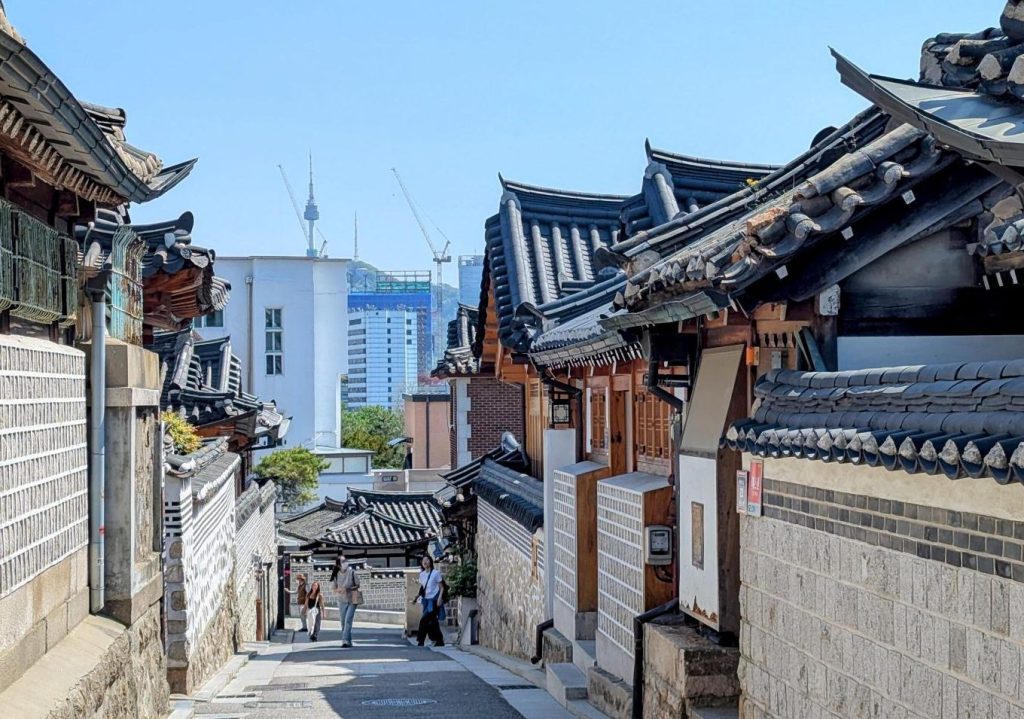
Seoul’s capital is well worth a few days of exploration. I recommend staying here before you start your bike trip. Check out my article on the Best Things to do In Seoul to make the most of your time there.
Yeoju: Laidback, Riverside Vibes
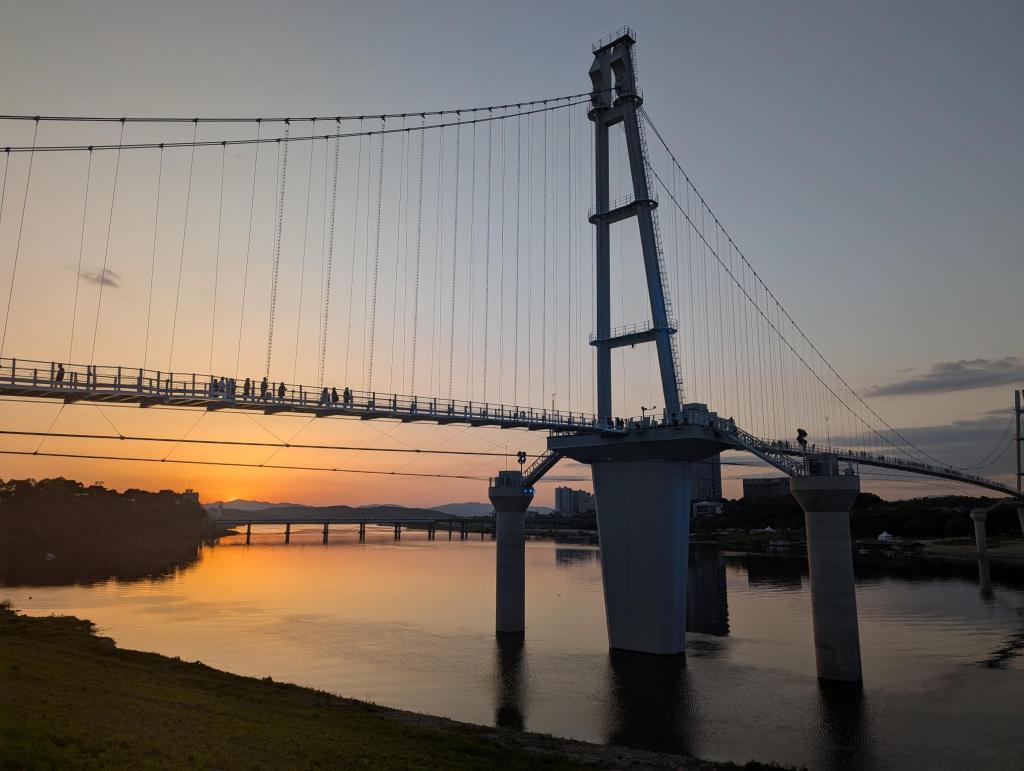
I really liked Yeoju, even though there isn’t really much there. It is a modern town with lots of riverside trails, a huge suspension bridge, and lots of good street food. It is well worth checking out the Sileuksa temple, where you’ll often hear monks chanting, and the park around the Yeongwollu Pavilion, where rabbits roam freely. The Nyeongneung (Tomb of King Hyojong & Queen Inseon) is also very impressive – grass burial mounds surrounded by statues sit in a park with pleasant, shaded trails to explore.
Woraksan National Park: Mountain Peaks
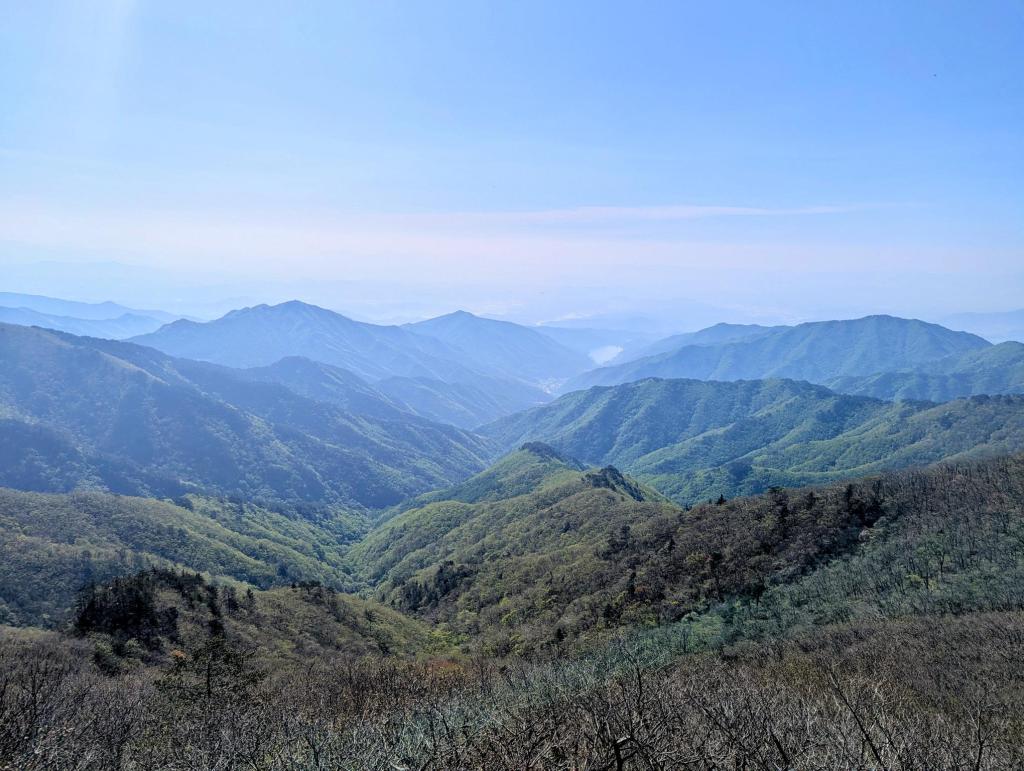
We left our bikes in Chungju so we could go off for a few days hiking in Woraksan National Park. It is a beautiful, mountainous area with amazing ridge trails, from where you can see the blue-grey hills disappearing into the distance.
Suanbo: A Hotsprings Town
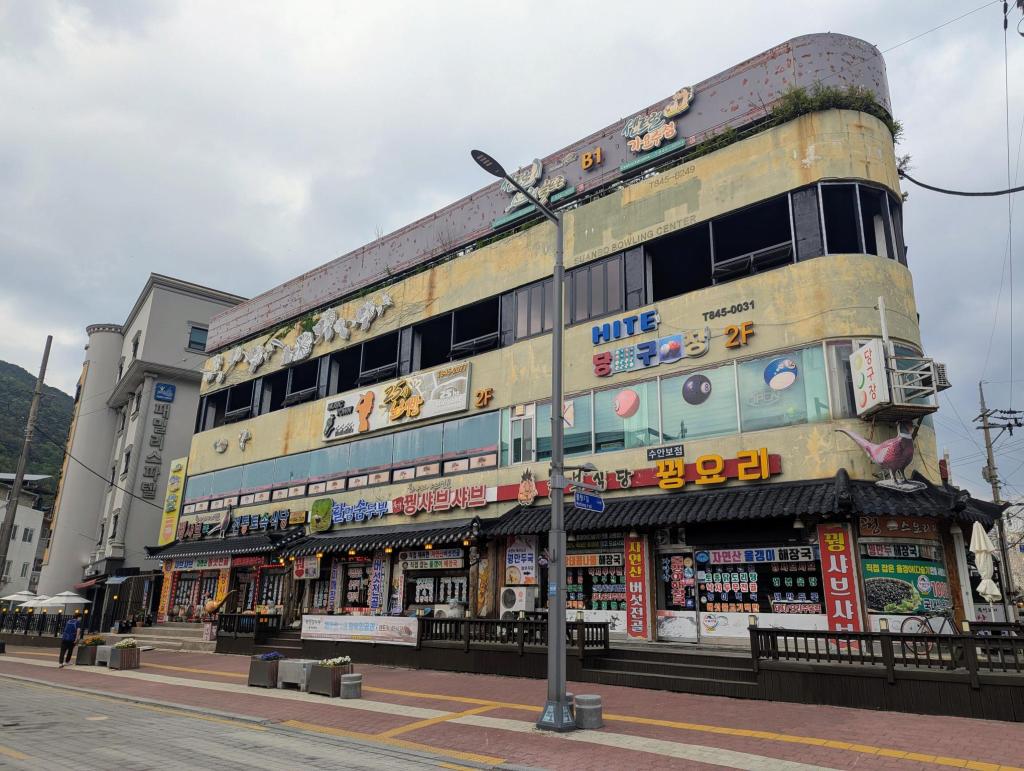
Suanbo is known for two things: its hot springs and its pheasant dishes. There are several foot bathes around town that you can sit in, next to the locals. Or go to a jjimjilbang, or Korean bathouse. These are seperated into men’s and women’s sections, and people bathe entirely nude. As for the pheasant, there is no shortage of places to try the local speciality. Just follow the large statues of the bird in front of restaurants that serve it.
Mungyeong Saejae Pass: Beautiful Views
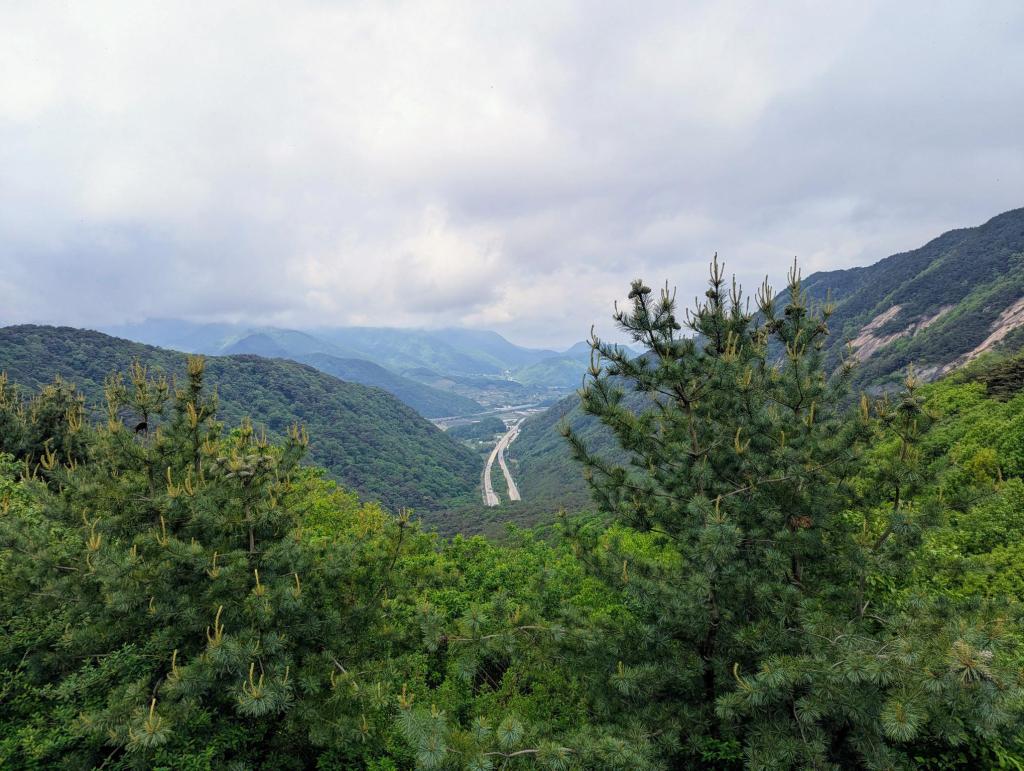
After leaving Suanbo, the bike route starts to climb to its highest point, the Mungyeong Saejae Pass. It offers beautiful views across the mountains, and is followed by a glorious descent.
Sangju Bicycle Museum: Everything With Two Wheels
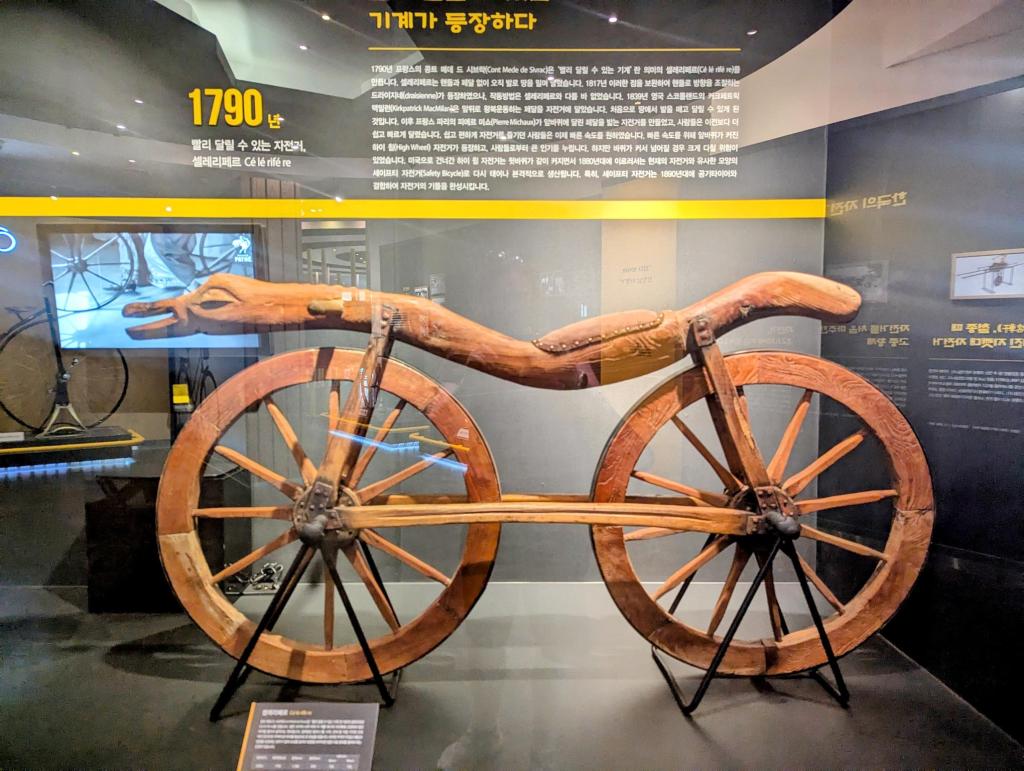
The Sangju Bicycle Museum is well worth a visit. It houses bikes dating back several hundred years, til they were little more than two circles of wood connected by a stick. It only takes 30 minutes to walk around, and there is a machine serving hot and cold drinks, including lemon frappe, that will be most welcome after a morning pedaling.
Andong: Korea’s Most Beautiful Folk Village
Andong is technically on the cycle route, although it involves an out of back from the main trail. It is well worth the extra couple of days in the saddle, however. Andong is often seen as the spiritual heart of Korea. It has many Confucian centres, and one of the best preserved villages in the country, called Hahoe Folk Village. The city also has a beautiful riverside with old bridges that light up in the evening.
Daegu: Discover Korean Traditional Medicine
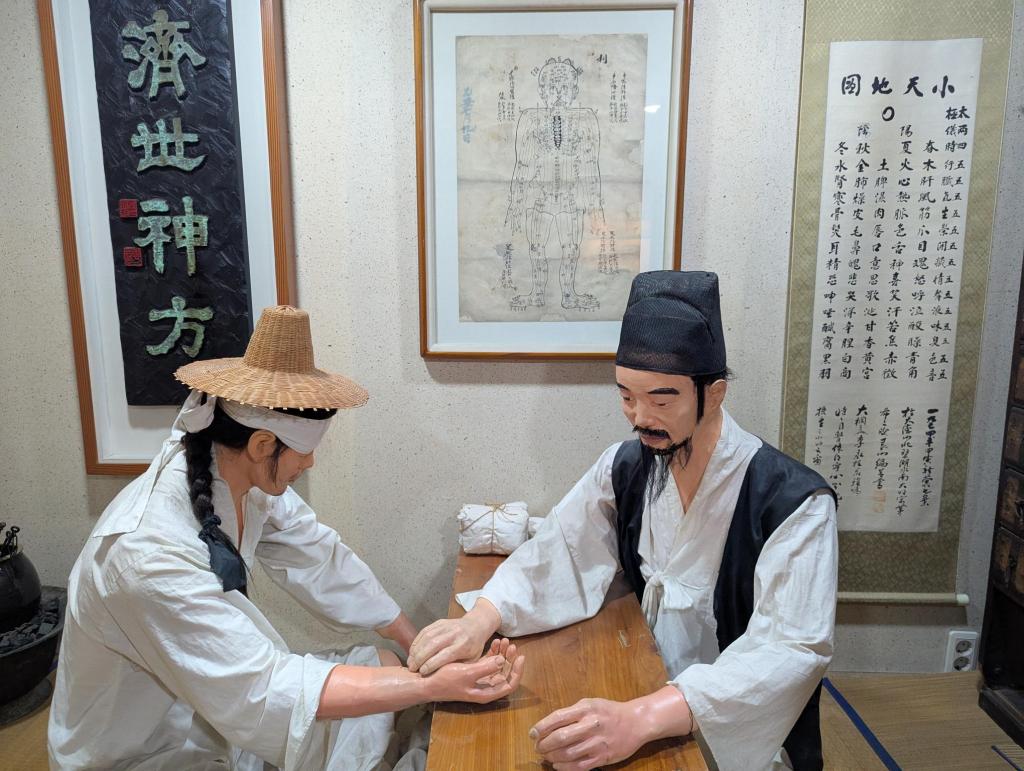
Most of Daegu is passably ugly, with big towers and non descript city vibes. But it does have a beautiful old centre, including a market of medicinal plants, and several museums and centres dedicated to Korean Traditional Medicine. You can learn about the practises, and also try them out. Some parts of this are more enjoyable than others: you can have a brief acupuncture demonstration, or be told that your skin looks old. Head to 한방의료체험타운 for either option.
Busan: Color and Culture by the Sea
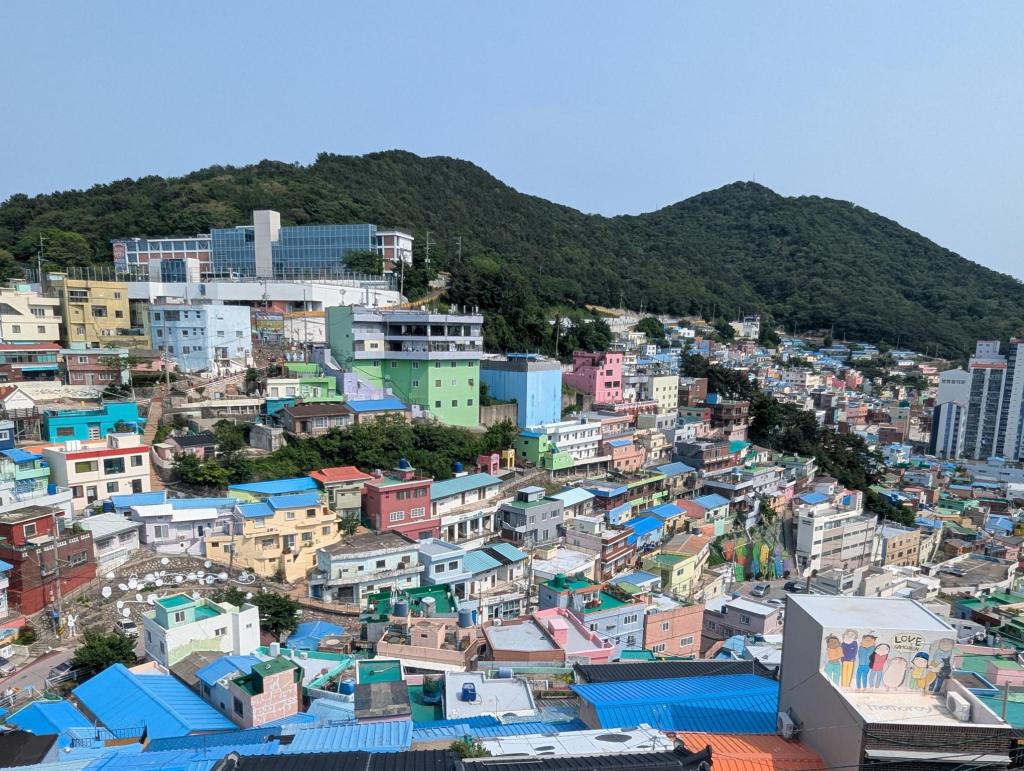
Korea’s second city is a beautiful place to end your cycling adventure. It feels surrounded by water, with the sea on one side and a wide estuary on the other. My favorite experiences were the Eulsuk Island, which is where you can get your medal for finishing the trail, and has a bunch of museums spread around a park, and the Gamcheon Culture Village, a colorful cluster of houses on a hill.
After completing the Cross-Country Bike Trail, we headed to Jeju island to do the Jeju island fantasy bike route. I’ll write an article about it soon – it is a delight!
Tips and Tricks to Know About Cycling in South Korea
1. Pick the right season
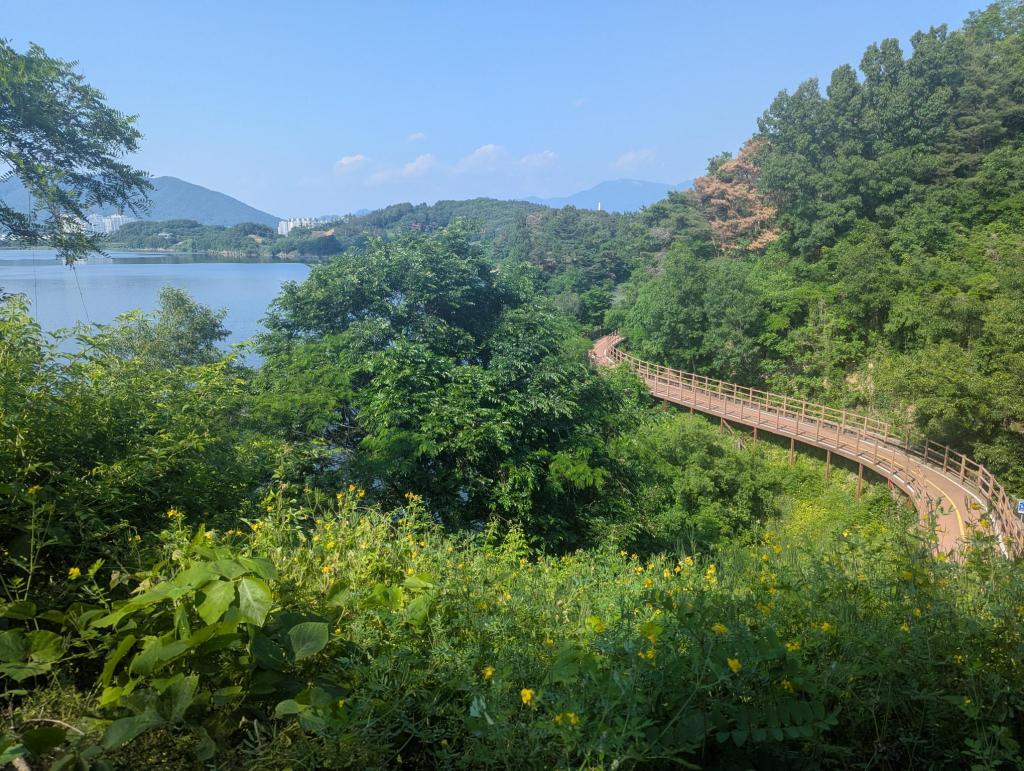
Spring (April–June) and autumn (September–October) are the best times to cycle. The weather is mild, the skies are clear, and you avoid the intense summer humidity and monsoon rains. Winter is possible but only for experienced cold-weather riders.
2. Book accommodation ahead of time
Since the route passes through many rural areas, there aren’t always a wide range of accommodation options. I recommend booking guesthouses and hotels ahead of time, so you don’t end up having to cycle on another hundred kilometres on already tired legs.
3. Stock Up at Convenience Stores

CU, 7-Eleven, and GS25 are everywhere, even in small villages. They sell noodles, kimbap, snacks, and coffee — plus hot water for cup noodles. You can pretty much fuel an entire trip from these stores if you don’t want to plan meals.
4. Learn a Few Korean Phrases
Most people outside major cities won’t speak much English, but they’re incredibly helpful. A few words like annyeonghaseyo (hello) and kamsahamnida (thank you) go a long way — and often earn you free snacks from curious locals.
5. Download Korean on Google Translate
Korean food is delicious, but ordering can be complicated, as English is rarely on menus. Download the Korean language pack in Google Translate before you go — that way you can scan menus offline, ask for directions, or quickly translate signs along the route. It’s also handy if you need help at guesthouses or bike shops.
6. Get Travel Insurance for Your Trip
For this sort of adventure, make sure you have travel insurance. Not only for bike crashes or scraped knees, but for tummy bugs, pickpockets or anything else that might happen along the way. I recommend SafetyWing for its flexibility: you can sign up or cancel at any time, coverage is comprehensive, and customer service is responsive if you ever need to make a claim
7. Where to Buy a Bike in Seoul
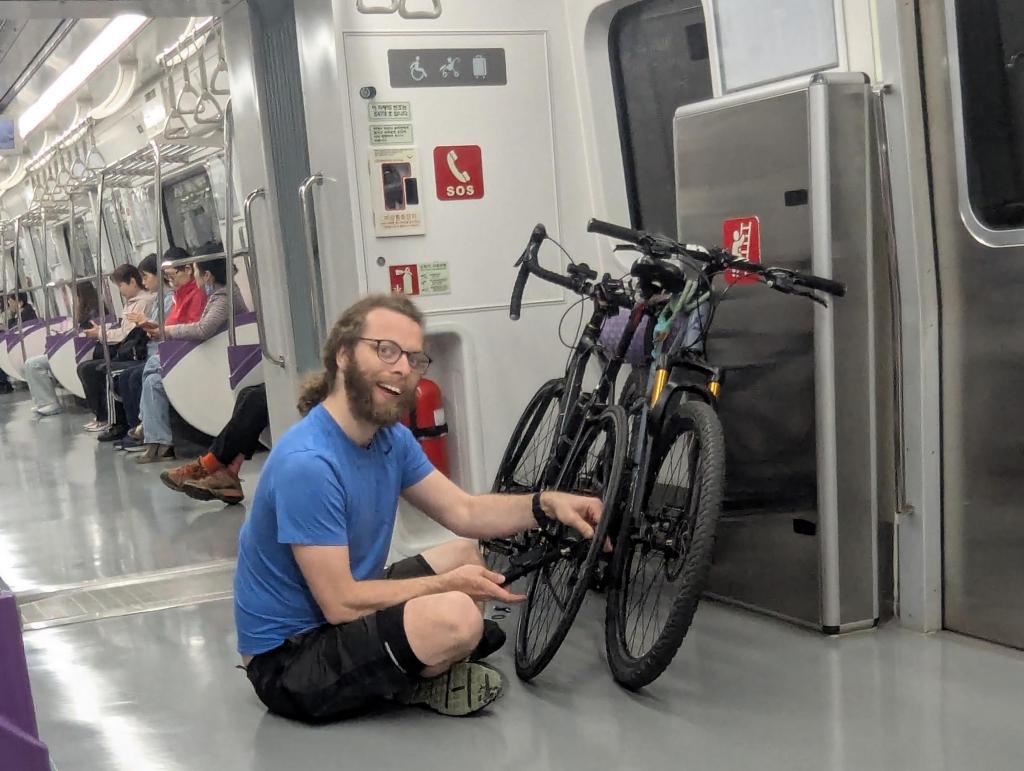
We had read online that buying a bike in Seoul could be tricky, but we actually found it easy. We went to Dongdaemun General Market and found several people selling second-hand bikes that ranged in price from 30 euros to several hundred. If you are taller, it is harder to find one that is your size, so you may want to bring a bike from home.
Seoul has several decathlons, but they are all out of stock of bikes and have been for several years.
Another option is to order a bike on Coupang, Korea’s amazon. There are some very cheap options, but I recommend against this. Some of our friends had coupang bikes which fell apart before the end of the trip. They are made of cheap materials and are essentially disposable. Which obviously is hideous for the environment, and has the potential to ruin your trip when you have to cycle with only one pedal for 50 kilometers (this actually happened).
8. What to do with your bike at the end of your trip
If you buy a bike in Korea, think ahead about what you’ll do with it once you finish.We ended our trip in Jeju City and donated our bikes to a local charity shop. Some riders sell theirs second-hand in Seoul or Busan, while others pass them on to new cyclists. It’s a nice way to give your bike a second life rather than abandoning it.
Feel free to reach out below if you have any questions about the route!
Other articles you might enjoy:
Your Guide to the Best Hiking in South Korea
 Shortcuts and Side Qests
Leave a comment