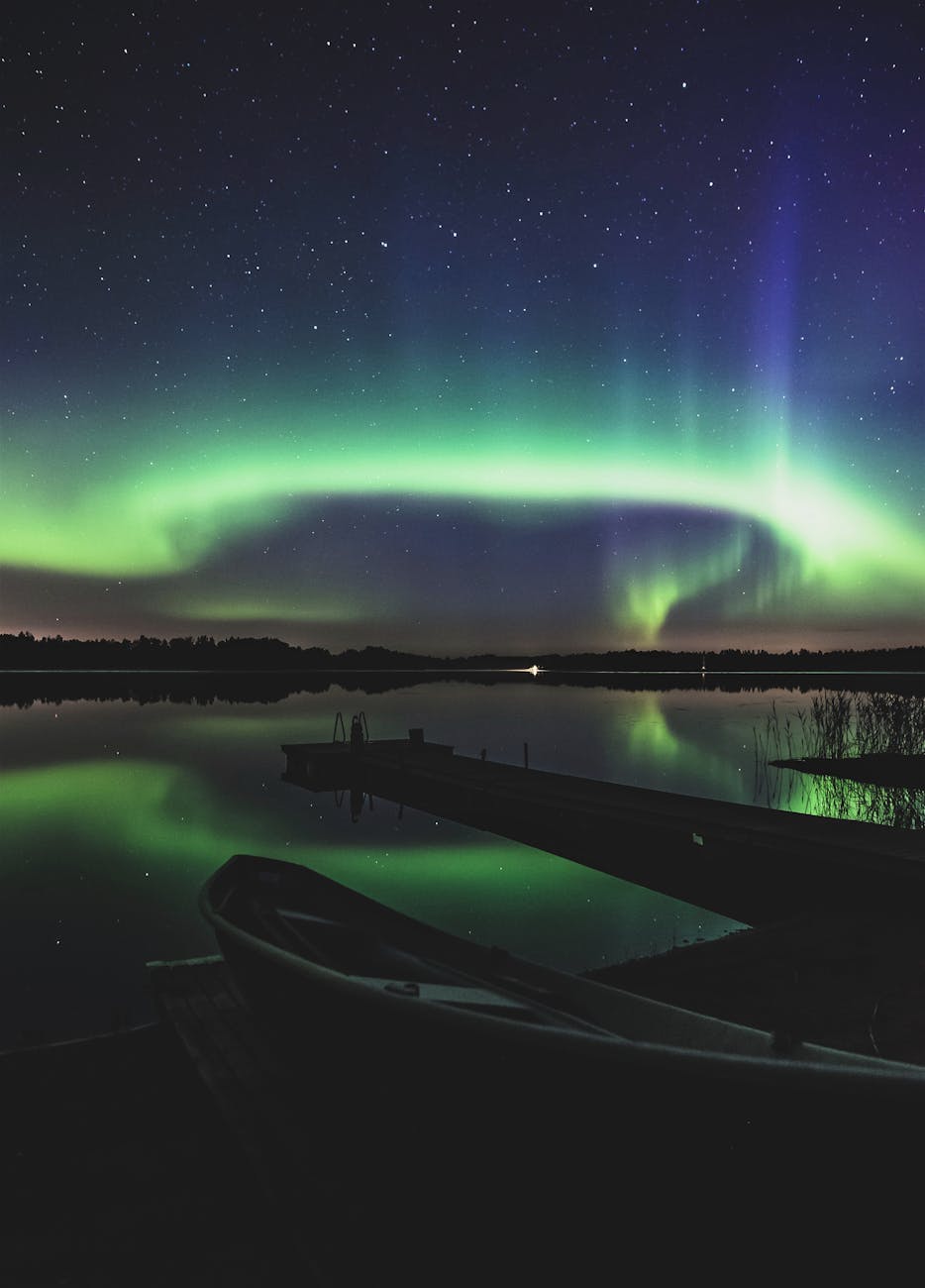
With almost 74% of the country covered in forest, it comes as no surprise that there is some fantastic hiking in Finland. Pick any of the 41 national parks, and you will find marked trails that can lead you on short strolls or multi-day hikes.
I visited Urho-Kekkonen National Park in February 2025 for a multi-day, hut-to-hut winter hike. It was a stunning experience, unlike anything I had done before. We spent days meandering through snowy valleys and climbing wind-swept fells. We slept in open wilderness huts. Finland has several hundred of these throughout the country. They are a free, beautiful place to sleep, where you meet hikers from all over the world. One even had a sauna.
The experience made me interested in exploring more of the best hikes in Finland. I am planning to go back in the summer to see some more!
Until then, I put together this guide. It has everything you need to know when you plan your hiking trip to Finland. Including:
- How to escape the dreaded mosquitoes
- How to stay for free in wooden cabins throughout the country
- Which sweets to pack as your ultimate Finnish hiking snack
Why Hike in Finland?
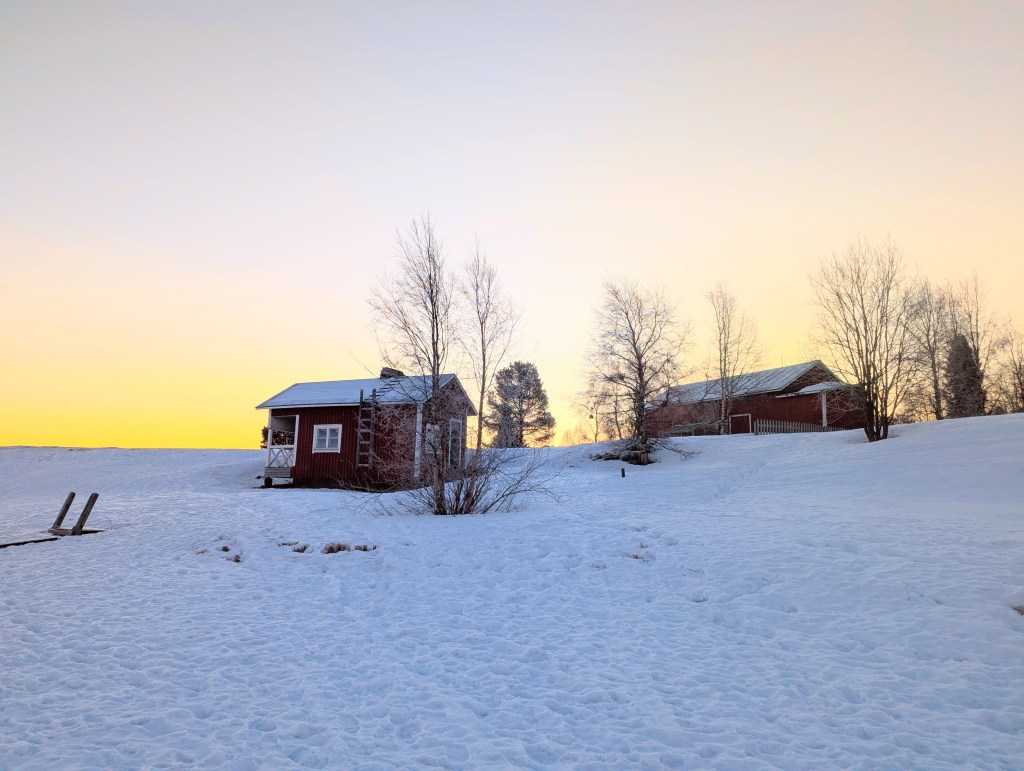
Two words for you: wilderness sauna.
Imagine hiking all day, arriving at a log cabin in the middle of nowhere, spending some hours relaxing all your muscles in a log-burning sauna, and then jumping into the lake to cool off.
It is the most quintessentially Finnish experience to be deep in the forest in a sauna. I didn’t realize it was on my bucket list until I experienced it. I am now telling everyone to put it on theirs.
If that isn’t enough to encourage you to book your ticket, here are a few more reasons that Finland is great for hiking.
- Each Season is Unique: In Winter, Finland turns into a snowy winter wonderland, and you can enjoy the Northern lights. In Summer, you can soak in the midnight sun. Spring and Autumn see flowers blooming and leaves turning to gold.
- A Great Network of Open Wilderness Huts: In the North of Finland, where most national parks are located, there are over 400 open cabins that hikers can use for free. These delightful log cabins come with gas stoves, log burners, and compost toilets. Big luxuries when you are out in nature!
- Some of Europe’s Most Untouched Nature: The nature in Finland is sublime. Lapland is often described as the last wilderness in Europe. It is a misnomer, as Lapland is not devoid of people. The indigenous Sámi reindeer herders have lived here for centuries, so the wilderness is not untouched, nor empty of humans. Rather it is an unspoiled ecosystem, that humans have lived in harmony with.
- Well-marked trails: The tricky thing about planning a hike in Finland is that there are too many trails. You are spoiled for choice. The good thing is that you can hardly go wrong – everywhere is beautiful.
- Wildlife encounters: Finland is home to amazing wildlife, including reindeer, moose, bears, and wolverines. You’re unlikely to see the last two, thankfully, but you may well spot their paw prints. There are also lots of birds, filling the trees with song.
- Everyman’s Right (Jokamiehenoikeus): Finland has one of the world’s most generous outdoor access laws. It is known as Everyman’s Right, as in, every human has a right to the land. You can hike, camp, and forage for berries and mushrooms on all public land.
Where is the Best Hiking in Finland?
Finland has many different areas for hiking, the three most beautiful regions being:
- Lapland: for dramatic Arctic tundra
- The Lakeland Region: for vast expanses of shimmering water
- The Archipelago: for coastal views and island hopping
Best One-Day Hikes in Finland
Kilpisjärvi to the Three-Country Cairn
- Distance: 22 km (out and back)
- Region: Lapland
Walk through the Arctic tundra to reach the point where Finland, Sweden, and Norway meet. The cairn itself is surrounded by water. But there is a wooden walkway if you want to run excitedly between three countries.
Koli National Park
- Distance: 3-7 km (various routes)
- Region: Lakeland
Iconic Finnish landscapes of rolling hills, forests, and Lake Pielinen. This area has inspired many Finnish painters and poets.
Artist Venny Soldan-Brofeldt described it thus:
“The scenery was fabulous: the meadows, pastures, trails of smoke in the evening sun, the hills looming in the distance.”
Small Bear’s Trail (Oulanka National Park)
- Distance: 12 km
- Region: Lapland
Rapids, hanging bridges, and deep forests. The scenery might be right out of a fairy tale, but it is more Brothers Grimm than Disney.
This is the most popular day hike in the country. There are 100,000 visitors a year, so travel out of the main season to avoid crowds.
Ahmankierros / Circle Trail (Iso-Syöte National Park)
- Distance: 17 km
- Region: Lapland
Gorgeous fell-top views, ancient pine forests, and a chance to spot reindeer. Fun fact, reindeer have really round heads, and the first time I saw one I thought it was a capybara.
Repovesi National Park
- Distance: 5-15 km (various routes)
- Region: Southern Finland
Stunning rocky cliffs, wooden suspension bridges, and peaceful lakes. Great for photography and gentle family walks.
Best Multi-Day Hikes in Finland
Karhunkierros (The Bear’s Trail)
- Distance: 82 km
- Duration: 4-7 days
- Region: Lapland
The Bear’s Trail is Finland’s best known and most popular multi-day hike. It winds past the roaring rivers of Oulanka national park, past waterfalls and canyons, and over hanging bridges. You have the choice of doing part of the trail by canoe – if the waters tempt you!
Hetta-Pallas Trail
- Distance: 55 km
- Duration: 3-5 days
- Region: Lapland
This stunning trail was created back in 1934. It has been stunning hikers for almost a century with its panoramic fell landscapes and steep ravines.
UKK Trail
- Distance: 850 – 1000 km
- Duration: 30 – 50 days
- Region: Across Finland
This legendary thru-hike traverses much of Finland, from Koli National Park in North Karelia to Urho Kekkonen National Park in Lapland.
It is named after the former President Urho Kaleva Kekkonen, who actually hiked the route in 1957. If you have a couple of months to discover the forests and fells of Finland, this one is for you.
Best Winter Hikes in Finland
Urho Kekkonen National Park – Kilopää Winter Loop
- Distance: around 100 km, depending on route variations
- Duration: 6-8 days
- Region: Lapland
Urho Kekkonen National Park is true Arctic tundra, with barren, wind swept hill tops, and quiet valleys. In winter, it is a true winter wonderland, and an ideal place for cross-country skiing or ski touring. You can easily pick a route between the wilderness huts, which stay open in winter, and offer much needed protection from the negative temperatures!
Hetta-Pallas Winter Trail (Pallas-Yllästunturi National Park)
- Distance: 58 km
- Duration: 3-5 days
This popular trail is almost as busy in the Winter as it is in the summer. During the snowy season, you’ll take a slightly different route. Through the forests and marshes, rather than over the fells, where weather is unpredictable. In March and April, this route is fully groomed, making it ideal for a multi-day, snowy spring hike.
Where to Sleep While Hiking in Finland: A Guide to Open Wilderness Huts
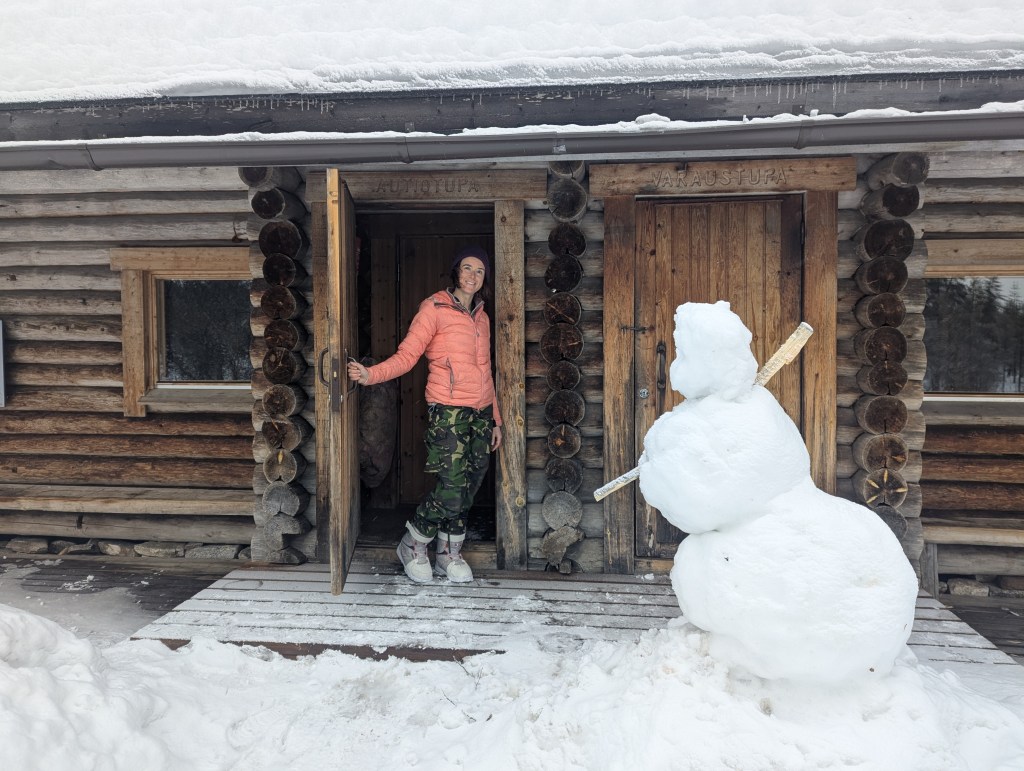
Wilderness huts are like libraries. They seem a bit too wholesome to be real. That there are beautiful log cabins throughout Finland, where you can stay for free, and chat with other hikers, blows my mind. And yet it is real, and it is one of the top reasons to chose Finland as a hiking destination.
It is worth noting that there are different types of wilderness hut, some of which need booking in advance.
Types of Wilderness Huts in Finland
Finland’s wilderness hut system is maintained by Metsähallitus, the country’s state-owned forest enterprise. There are four, different types of huts:
1. Open Wilderness Huts (Autiotuvat)
These free huts are left open, and anyone can come and sleep there, free of charge. They operate on a last-come, first-served principle.
The idea being that if you arrive earlier and have a chance to rest, you need to make room for those who arrive later than you.
In practice, people tend to claim their places on the bunks. It is always a good idea to have a tent in case there is no room left.
Autiotuvat typically have bunk beds, a wood-burning stove, and basic cooking facilities.
2. Day-use Huts (Päivätuvat)
Intended for resting and cooking during the day, Päivätuvat are usually open-air shelters. They should not be used for overnight stays unless in case of emergency.
3. Reservable Wilderness Huts (Varaustuvat)
You can book these huts in advance, and they have slightly more comforts than autiotuvat – such as mattresses.
4. Rental Cabins (Vuokratuvat)
These are more luxurious than standard wilderness huts, and can be booked in their entirety. They are ideal for longer stays or hiking groups who want privacy
What to Expect in a Finnish Wilderness Hut
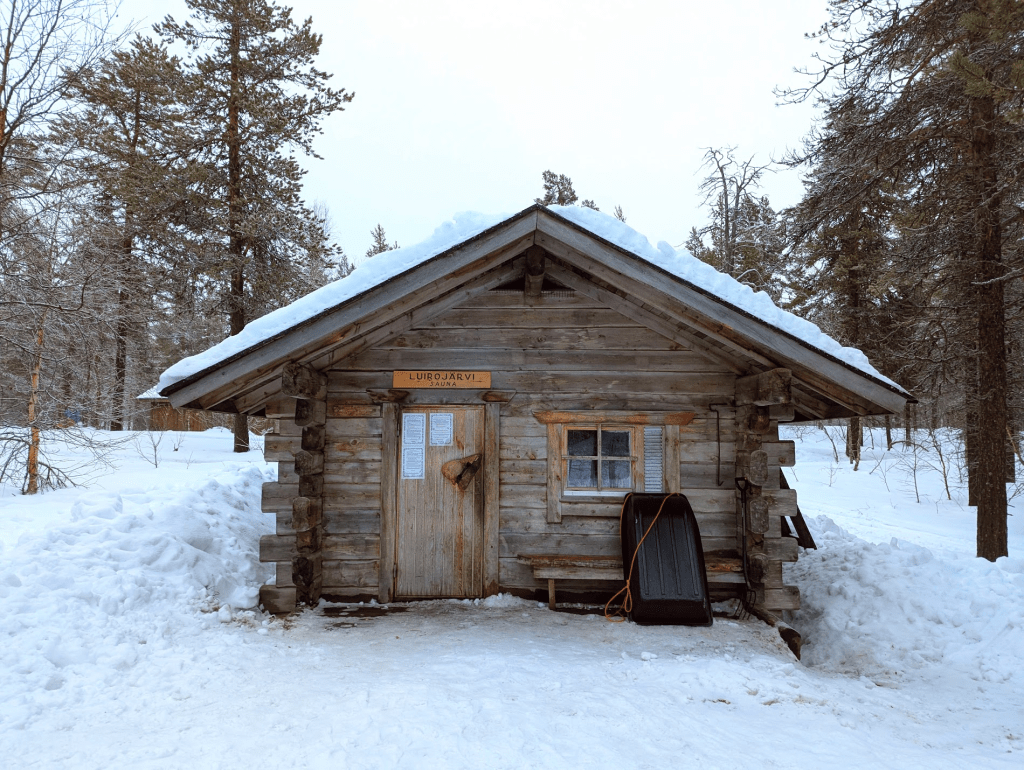
Most wilderness huts are basic but cozy, and after a day on the trail, feel downright luxurious. Here’s what you’ll typically find inside:
- A log-burner for heating (you may need to chop firewood)
- Basic pots and pans
- Buckets to melt snow
- Wooden bunks or sleeping platforms (bring your own sleeping bag and mat)
- A table and benches for eating and socializing
- An outdoor dry toilet (always bring your own toilet paper!)
- A nearby water source. Huts have no running water, but are generally located next to a lake or a river. These natural sources are very pure, but are not regularly tested. So it is still recommended to purify or boil water before drinking. In winter, you will have to break the ice over the water source, or melt snow, to obtain water.
- Some huts have a guestbook where hikers share their stories.
- A can crusher, which frankly doesn’t make it onto my list of must-haves while camping. But there you are!
How to Be a Good Hut Guest
There is a strong culture of etiquette in the outdoors in Finland, and if you have the privilege of staying in a wilderness hut, it is good to be aware of some unwritten rules:
- Leave no trace – pack out all trash
- Be welcoming – share space and make room for late arrivals
- Replenish firewood – if you use it, replace it
- Keep noise to a minimum – others may need rest
- If you are in a large group, book places in a Vuokratupa or Varaustuvat, rather than filling an autiotupa
In other words: don’t be a douche.
What to Pack To Go Hiking In Finland
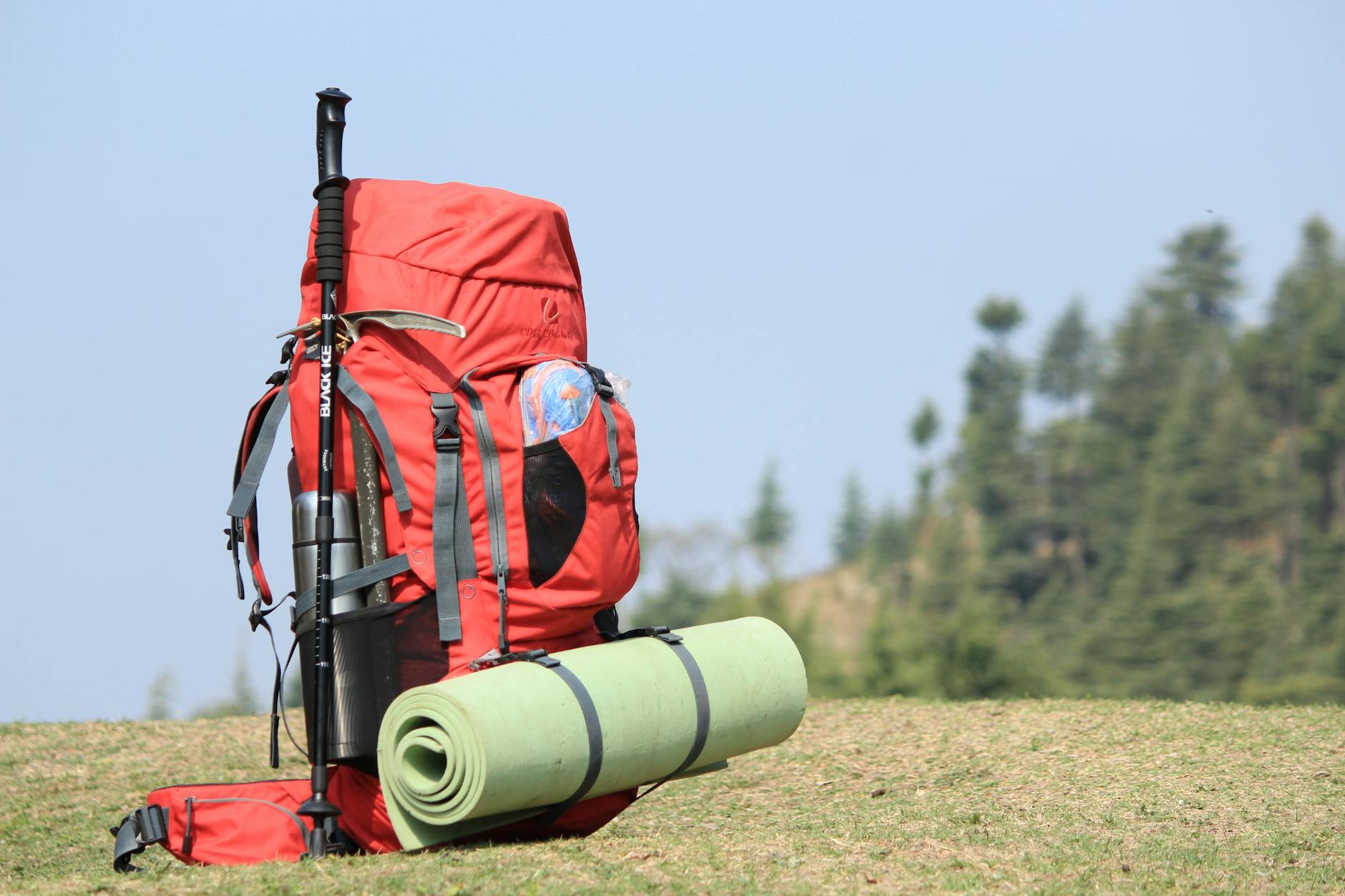
What you put in your bag will depend on the season, so I’ve divided this up into seasonal checklists.
Year-Round Essentials
- Tent or bivvy bag (even if you plan on staying in huts every night, having a tent as a back up if huts are full, or in case you get caught in an emergency, is highly recommended)
- Camping mat
- Sleeping bag
- First aid kit
- Navigation tools (downloaded maps, physical maps, compass…)
- Multi-tool or knife
- Trash bag
- Duct tape and basic repair kit
- Sunglasses and sunscreen
- Headlamp
- Camp shoes
- Waterproof backpack cover
- Food
- Battery pack
- Charging cable
- Details of your travel insurance, in case you need assistance on your help. I recommend Safety Wing, which has affordable, flexible plans.
Spring Packing List
- Waterproof hiking boots
- Thermal base layers (merino wool or synthetic)
- Fleece or insulated mid-layer
- Waterproof and windproof jacket
- Waterproof hiking pants or gaiters
- Gloves and hat (for cold mornings/evenings)
- Mosquito repellent (especially in late spring)
Summer Hiking Packing List
- Lightweight, breathable, quick-drying hiking clothes
- Light waterproof jacket (for sudden rain)
- Sun hat
- Mosquito head net
- Bug spray (DEET or natural alternatives)
- Sleeping mask
- Refillable water bottle & filter (plenty of fresh water sources)
- Light gloves & beanie (for chilly nights in Lapland)
Autumn Hiking Paking List
- Waterproof hiking boots
- Thermal base layers (merino wool or synthetic)
- Fleece or insulated mid-layer
- Waterproof and windproof jacket
- Waterproof hiking pants or gaiters
- Gloves and hat (for cold mornings/evenings)
- Thermos (for warm drinks on the trail)
- Extra socks (feet get wet easily)
Winter (December–February)
- Thermal base layers (top & bottom)
- Fleece or insulated mid-layer
- Insulated down jacket
- Waterproof, insulated pants
- Snow boots
- Thick socks (multiple pairs)
- Ski gloves & liners
- Buff or face mask (for windchill protection)
- Snowshoes or touring skis (depending on terrain)
- Thermos (for hot drinks)
- Emergency blanket (for extreme conditions)
- Extra battery pack (phones die quickly in the cold)
FAQs (Frequently Asked Questions) about Hiking in Finland
When is the best time to hike in Finland?
You can hike in Finland all year round, and each season has its benefits.
Spring (March–May): Trails are often muddy and icy; late spring is best for hiking. Wildflowers are in bloom in many places.
Summer (June–August): Long days mean summer is perfect for big hiking days. The weather is warm, and quite dry. However, mosquitoes are a big nuisance.
Autumn (September–November): The mosquitoes die off and the trees turn orange. Autumn is a lovely time for hiking, although be prepared for rain, and early snows.
Winter (December–February): Most of Finland is transformed into a winter wonderland. Snowshoeing and skiing replace traditional hiking. Many people use pulkas to carry their gear – meaning no heavy backpacks!
Are mosquitoes really that bad in summer?
In Scotland, the brief sunny months of summer also bring with them swarms of midges so dense that you inhale them. The situation is similar throughout the Nordic countries. From May to September, you can expect to be bothered by the little kritters, especially in Lapland, forested areas and near water.
Use insect repellent, wear long sleeves, and bring a mosquito head net for protection.
Can I hike alone in Finland?
The Finnish have a reputation for being introverts, and avoiding other people as much as possible. So if you want to go on a solo-hike, you won’t be alone! In fact, Finland is one of the safest countries for solo hikers.
However, as always when hiking alone:
- Always inform someone of your route.
- Carry a map and compass (phone signal can be weak).
- Bring proper gear (weather changes fast).
- Listen to your body, and stay within your limits.
Is wild camping allowed in Finland?
Yes! Thanks to Everyman’s Right (Jokamiehenoikeus), you can camp almost anywhere except near private homes or in rstricted areas.
Are there dangerous animals in Finland?
There are bears and wolves in Finland, however they are sparse, and avoid humans. Elks (also known as moose) are numerous, and can be dangerous is startled. Give them a lot of personal space, and you’ll be fine.
Ticks (in southern Finland) can carry Lyme disease, so check for bites after hikes, especially in Spring and Summer.
Is drinking water available on trails?
Yes! Finland has some of the cleanest water in the world. Lakes and rivers are frequent along hiking routes. However, it is advised to use a water filter or purification tablets to be safe.
Is hiking in Finland expensive?
Scandivanian countries are notoriously expensive compared to the rest of Europe. I felt some trepidation about traveling there. When it came to the costs of the hiking trip, however, I was pleasantly surprised.
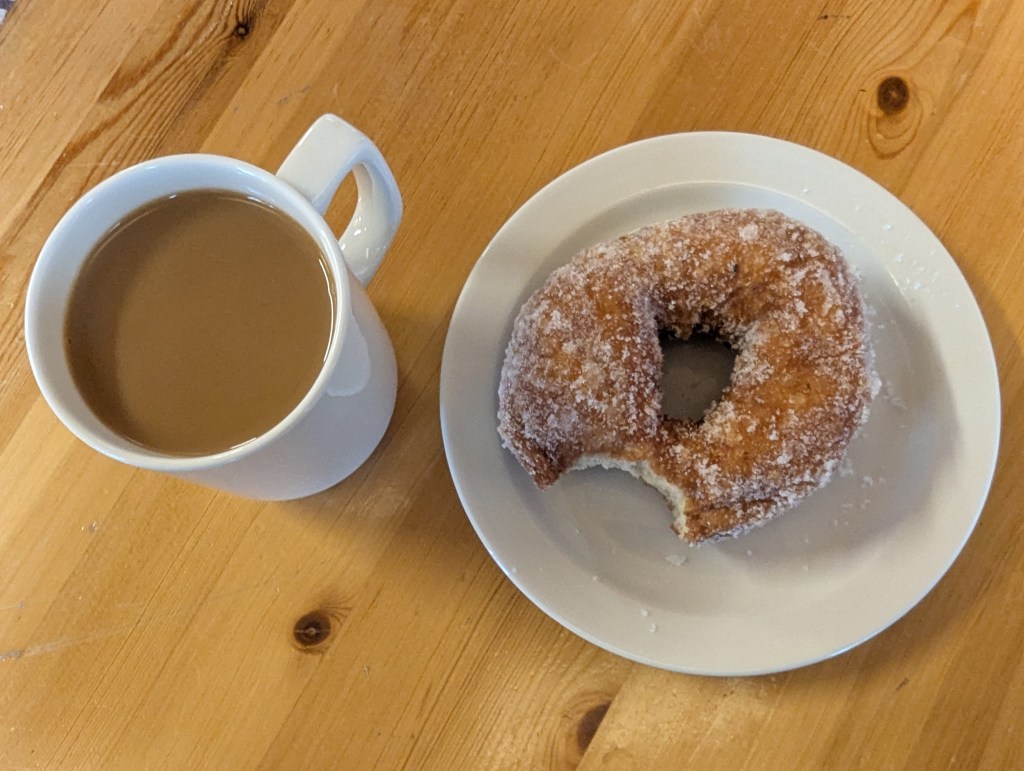
The free huts obviously are a great way to save money. Supermarkets in big towns were barely more expensive than they would be in France or the UK. Plus they have big selections of fresh pastries, which are a great place to try munkki (Finnish doughnuts), korvapuusti (cinnamon rolls) and karjalanpiirakka (rice porridge, backed in a rye crust).
When we finished our hike, we treated ourselves to a meal out – a buffet at Kiilopaa Fell Centre, which cost
The only expensive part of our trip was accommodation when we stayed in Oulu and in Inari. We payed on average 40 – 60 euros per person. And at one point decided to pitch our tent in -13 degrees, as nothing was available for under 100 euros.
All in all, while it does require a bit of work to get good deals, it certainly is possible to have an affordable trip to Finland.
What Are the Best Finnish Hiking Snacks?
Fine, this isn’t really a frequently asked question. I just felt like talking about food. Because we all know that hiking is 10% walking, 90% thinking about where your next snack will come from.
You’ll be pleased to hear that Finland has some great snack options available!
There are tons of different types of rye bread, which make great sandwiches. It keeps well for several days.
Squeaky cheese is a high-calorie snack that is perfect for the trail. I recommend heating it on a log-burner at the end of a day’s hike.
Most importantly, Finland is the country of pick and mix. Fill up a bag of candy to take with you. Just beware of the licorice options which fill up have the sweet aisle. Sometimes coated in chocolate. The aniseed flavored, salty sweets took me by surprise a few times.
Luckily, when you’ve been hiking for days in -10 degrees, you’ll eat pretty much anything.
Other articles you might like:
Inari, Finland: How to Visit the Sámi Cultural Capital
 Shortcuts and Side Qests
Leave a comment