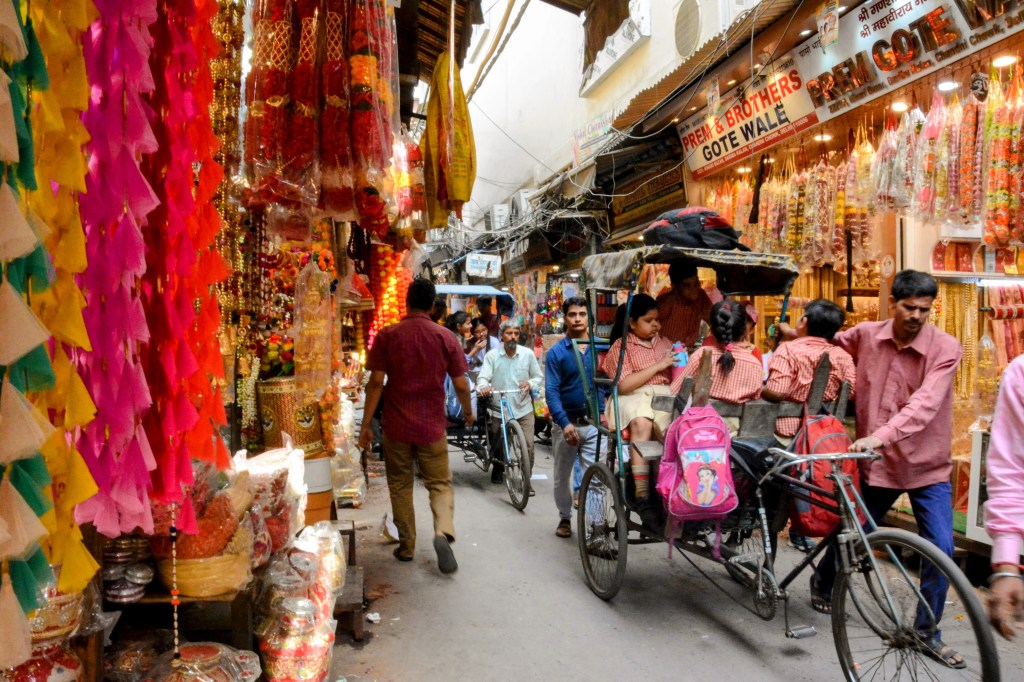
There are cities which you fall in love with at first sight. Then there is Delhi.
It is hot and dusty in summers, cold and polluted in winters. It is in-your-face, busy, jostling with people. But once you do fall in love — which you can’t help but do, if you stay and explore long enough — that love is deeper and more beautiful than loving Paris, or Amsterdam or London.
Many travellers don’t give it a chance — they stay for a couple of days, feel overwhelmed and then run away to more laid-back destinations, the tourist enclaves of Rishikesh or Goa or Rajasthan.
They miss out on Delhi’s sprawling, beautiful parks, its bizarre bazaars, its stunning architecture, its history. The way it brings all parts of Indian society together in one swirling, overflowing city. I mean, the population of the Delhi metropolis is more than that of Australia – get your head around that!
If you do get a chance to come, stay. Catch your balance, find your bearings. And delve in. Trust me, it will be worth it.
Old Delhi: The Heart of the City

Whether you are staying in Delhi for a while, or just for a couple of days, a walk through Old Delhi is a must.
Old Delhi refers to the historic part of India’s capital, originally founded as Shahjahanabad in 1639 by the Mughal Emperor Shah Jahan. It was the capital of the Mughal Empire until the British shifted power to New Delhi in 1911. Today, it is a busy maze of narrow streets, where you will find beautiful old buildings, bazaars selling everything you could think of, and some of the best street food on the planet.
The best way to visit Old Delhi is on foot. Here is my self-guided walking tour. It will take you through the highlights of the old city, from spice markets to mosques and narrow streets of ancient houses.
Stop 1: The Red Fort – A Remnant of Mughal History
This huge complex, made of red sandstone, is hard to miss. It was commissioned by the Mughal Emperor Shah Jahan in 1638 and completed in 1648. It then served as the main residence of the Mughal emperors for about 200 years.
You’ll need to purchase a ticket to enter the fort and see the structures within, which include halls of audience and luxurious apartments. The buildings are a beautiful mix of Persian and Indian styles.
Stop 2: Dariba Kalan – The Silver Bazaar
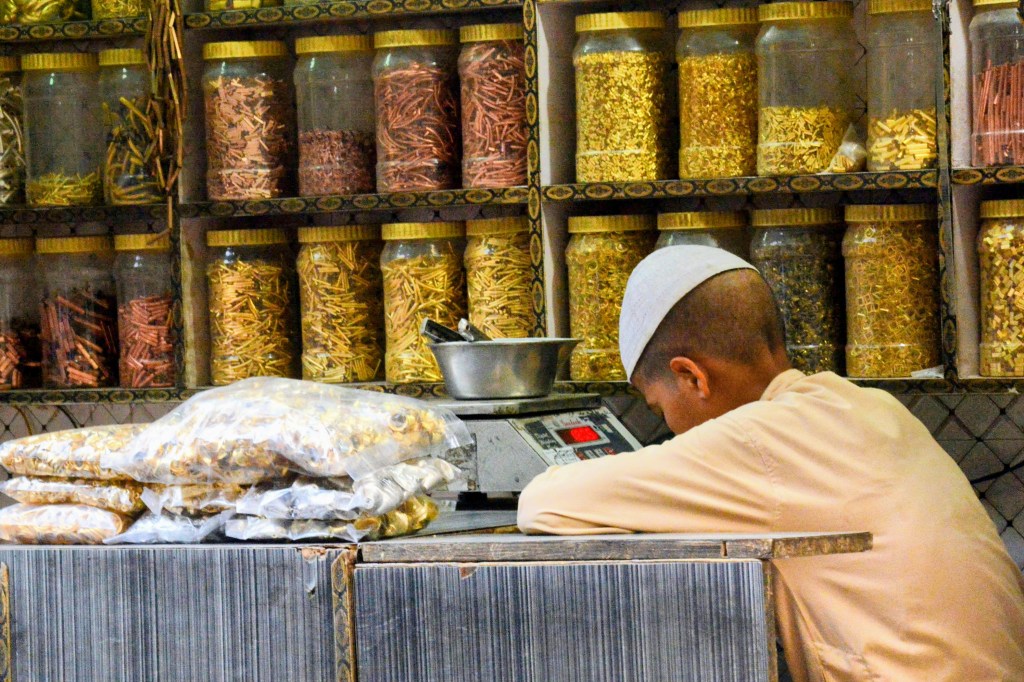
From the Red Fort, walk into the maze-like bazaars of Old Delhi. One of the most impressive of the bazaars is Dariba Kalan, known to tourists as the “Silver Bazaar”. It’s actual name means the street of the “incomparable pearl,” a phrase I am definitely going to use to flirt in the future.
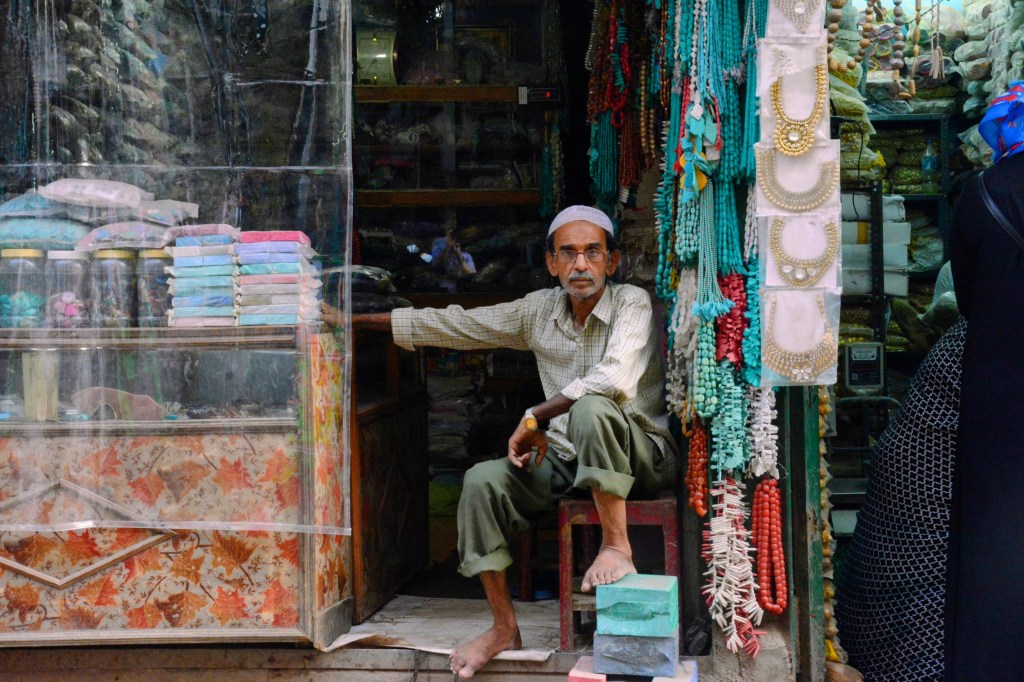
Dozens of small shops selling intricate silver earrings, necklaces, and bracelets. Shopkeepers sit facing the street, ready to advise. Behind them, safes are kept open, and in plain view. It is said to be more auspicious to leave the passage free for more money to fly in.
Stop 3: Kinari Bazaar – Wedding Street
Dariba Kalan leads into Kinari Bazaar, a street filled with garlands and wedding paraphernalia. It is a riot of colour, filled with jostling crowds: women shopping for wedding garb and decoration, design students looking for that perfect piece of braid for their project, school kids in uniform being taken home on cycle rickshaws, porters carrying merchandise from one place to another.
Stop 4: Khari Baoli – The Best Spice Market in Delhi
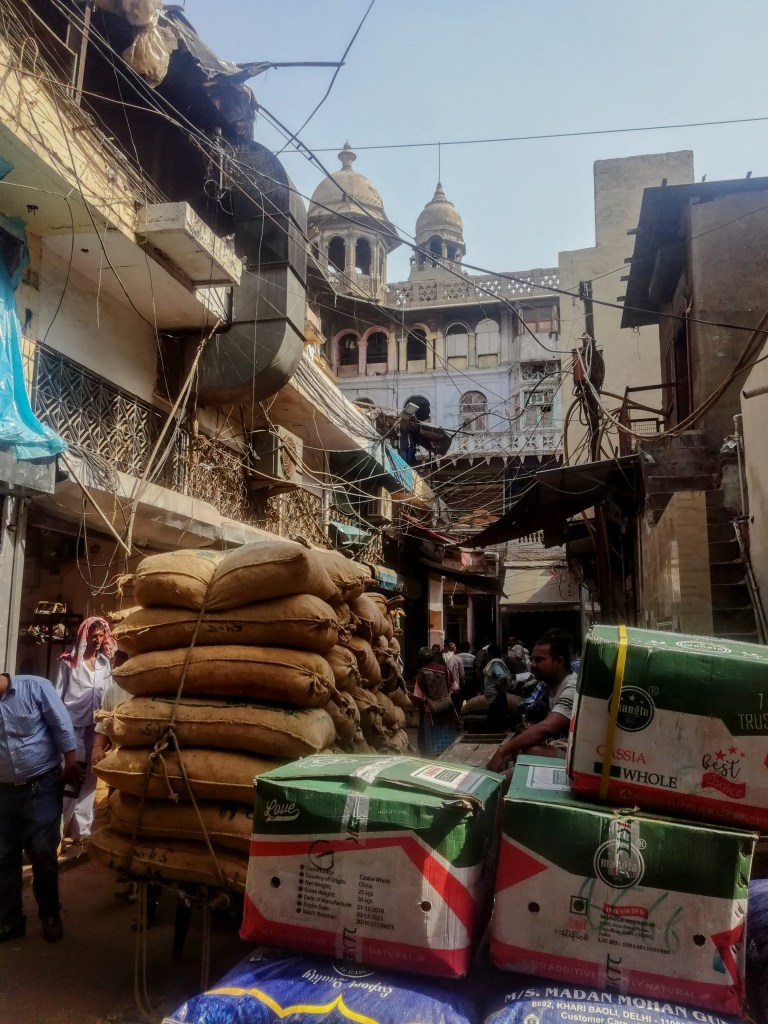
Nearby is the Khari Baoli spice market — a busy street lined with merchants selling everything from dried fruits to chillis, pickles, chutneys and tea. It’s reputed to be the best and cheapest place to get spices, and it’s an exciting place to go. A little way along the road, you can duck through a narrow archway into the Gadodia wholesale market. It’s a beautiful building- three stories around a courtyard, topped with little turrets.
It’s filled with sacks of every spice imaginable, and passersby sneeze as the air is filled with the fumes of pepper. Sacks of red chillis bleed out onto the floor, porters lug heavy sacks of spices from the wholesale market to the vendors outside. From the spicy chaos downstairs, you can climb up onto the roof of the market, and get a beautiful view over the nearby mosque. Up here, a peaceful and poetic atmosphere reigns, an odd contrast from the rush below, like stepping into a bubble, empty apart from a few kids playing kites.
Stop 5: Naughara Street
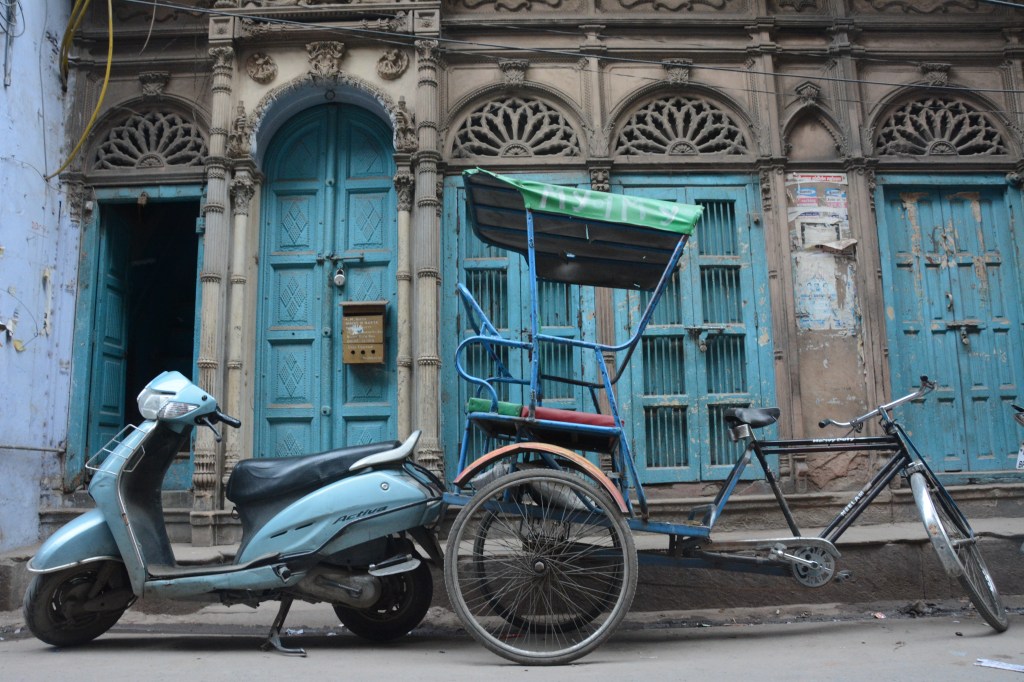
Sprinkled through the bazaars are fabulous old buildings, that you stumble across up a narrow alleyway or a side street.
Like the picturesque Naughara street, a jumble of colourful houses. They are all falling into disrepair though. A former employee of the Delhi branch of UNESCO, who had been involved in doing a census of these houses to help with their preservation, explained that it is almost impossible to save them. Old family buildings are now divided, through the laws of succession, between so many individuals it isn’t always sure what belongs to who, and no one has enough money for renovation. Especially since these old, crumbling houses aren’t necessarily valued, and Old Delhi is no longer a highly desirable neighbourhood to live in.
It’s sad that such a part of history is crumbling into dust. Although it wouldn’t be the first time one of Delhi’s avatars disappeared.
Old Delhi is barely old at all if you look at the cities long history. Hindus say that the city is the site of an ancient Indraprastha, home of the Pandavas in the Mahabharata, one of the most imporant texts in the Hindu religion.
Excavations near the Purana Qila found traces of human habitation dating back 3000 years. It is said that there are seven reincarnations of Delhi, from the Mahabharata to an ancient 12th century Hindu Kingdom, through Mughal and British Rule, to the Delhi of today, a city with rich culture and traditions, which reaches as deeply into the past as it does into the future.
Old Delhi Walking Tour – Map
Here is the Google Map version of the walking tour – save it to your phone, and have fun!
Other articles you might enjoy:
How to Always Have the Best City Breaks
4 Mistakes First-Time Travelers Make (and How to Avoid Them)
 Shortcuts and Side Qests
Leave a comment