
Most people rush through Ulaanbataar, Mongolia’s capital, heading straight to the country’s green grasslands and the beautiful Gobi desert. However, UB, as its friends call it, deserves a few days to explore its museums, unique nomad culture and great nightlife.
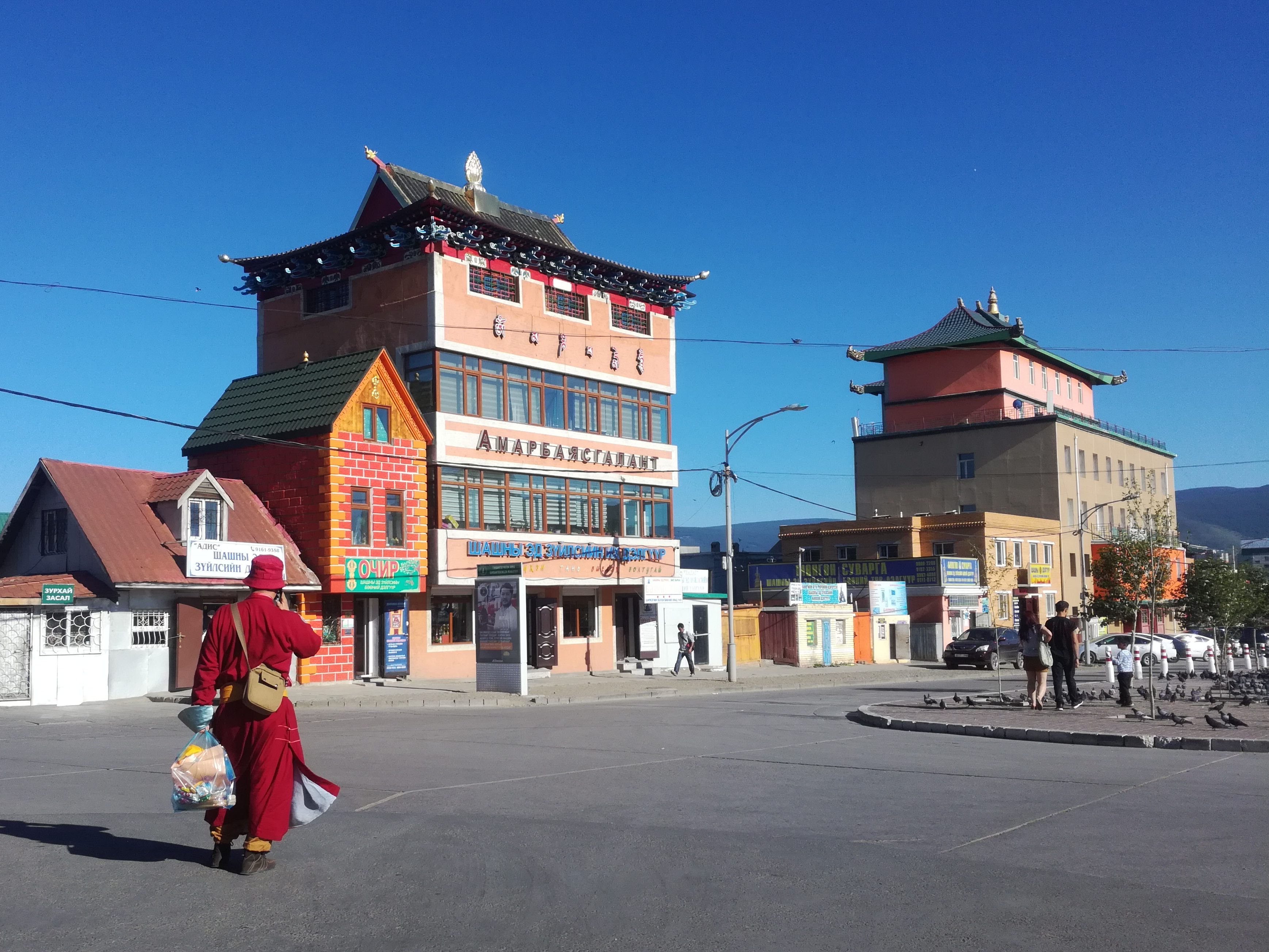
Ulaanbaatar isn’t pretty, but it is beautiful. Pastel colored Soviet-era architecture is set against a backdrop of rolling green hills. It creates a softly symmetric, slightly absurd Wes Anderson look.
UB is a city where you instantly feel at home. People are friendly and laid-back, the buzz of city life is a gentle hum, not an in-your-face roar. Downtown is small and easily walkable. Museums are fascinating, and there is some great food.
Mongolia attracts an increasing amount of tourists, drawn to the nomad culture and beautiful landscapes. The countryside is unforgettable, with yurts framed against empty grasslands or sand dunes and a bright blue sky.
But Ulaan bataar is also a city like no other. Where else can you see an entire neighborhood made of yurts? Or climb to a view point to see steppes on one side and skyscrapers on the other?
Plus, Ulaanbataar is where half of Mongolia’s population lives. You can’t get the full picture of the country if you don’t spend a few days discovering UB.
History of Ulaanbaatar, a Nomad City
Historically, Ulaan baatar has had trouble staying put. The first recorded capital city of the Mongolian empire was created in 1639. It was situated some 420 km from its current location. Since it was made of felt tents, the city was easily transported when the grass dried up. So Ulaan baatar has existed in a total of 25 locations since it’s founding. It was finally erected in its current location in 1778. Ulaann baatar used to be called the City of Felt. It was given its current name of Ulaanbaatar, which means Red Hero, after communists took over the country in 1924.
From that time on, and throughout the Cold War, Mongolia was a satellite state of the Soviet Union. The USSR provided military and economic support to UB. It also significantly shaped its political, economic, and cultural systems. This is still visible – from the Soviet style architecture and monuments, to the use of the Cyrillic alphabet. This officially replaced the Mongolian script on 1 January, 1946 .
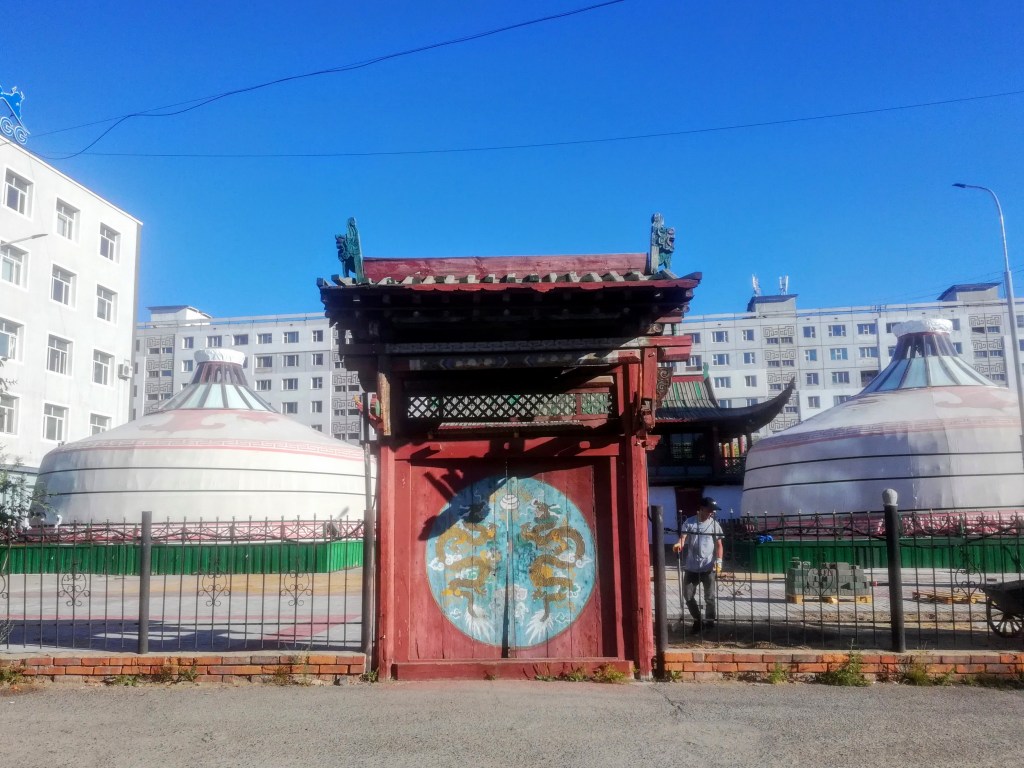
Today, nomad culture is visible throughout the city. Yurts — or Gers as they are known in Mongolia— are dotted throughout the streets, juxtaposed with high rise buildings. Due to climate change, hundreds of thousands of nomads have been forced to relocate to the city. This has led to the emergence of a vast slum area. Yurts are crammed together on the outskirts of town. They look oddly lost outside of the vast expanses of the countryside they were built for.
11 Things to do in Ulaan Baatar
As well as great restaurants, a vibrant nightlife and unforgettable festivals, UB has several world class museums and art galleries.
Walk around the town center
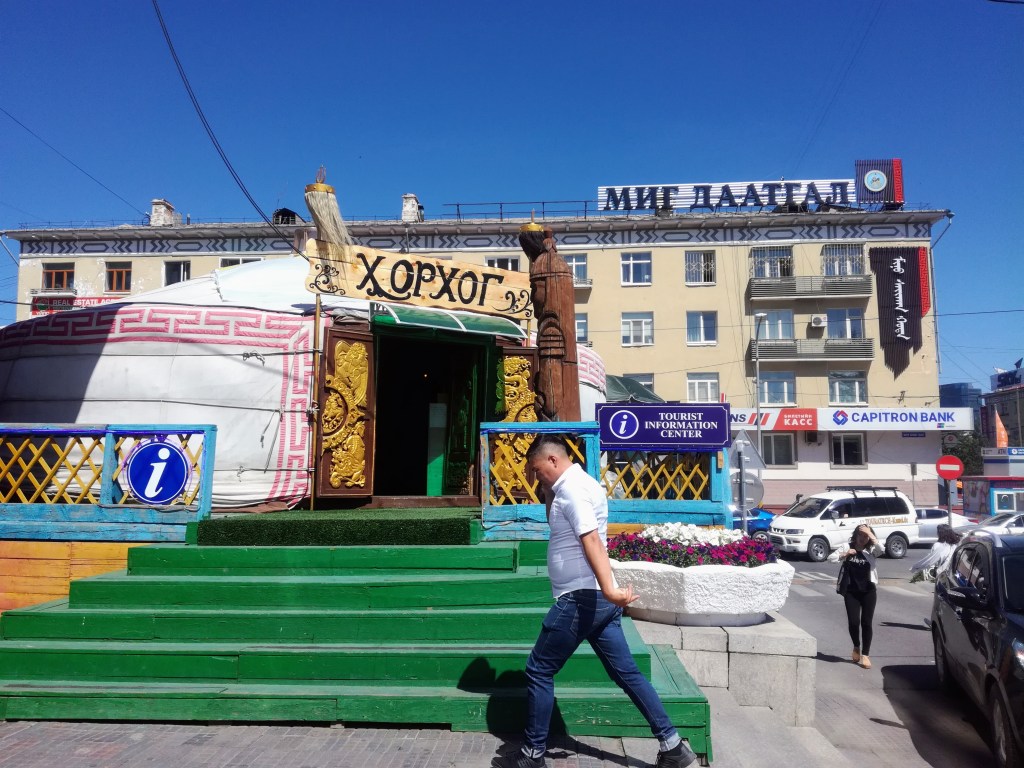
Many of the sights of Ulaan Baatar are concentrated in the pleasant down town area. It is a relaxing place to walk around.
At its heart is Sükhbaatar Square, located on the site where Damdin Sükhbaatar (the ‘hero of the revolution’) declared Mongolia’s independence from China in July 1921. In 1990, peaceful protests were held here, and eventually led to the end of the communist regime.
The square is surrounded by marble constructions in the neoclassical style common during Soviet times. They are the country’s parliament and Cultural Palace . In the middle of the square is a statue of Chinggis Khaan.
As you walk around the surrounding streets, be sure to check out Beatles square. It is named after a monument to the British band, complete with barefooted Paul, that sits to one side.
Visit Chojin Lama Temple Museum
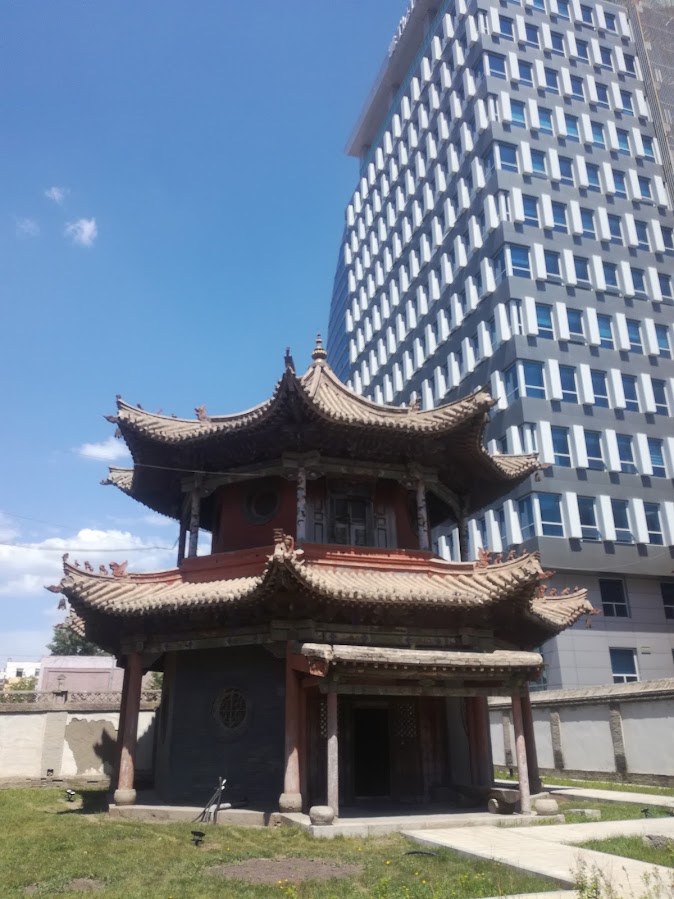
This ornately decorated Buddhist temple looks slightly incongruous among the towering apartment blocks of downtown. It opened in 1908, but was converted into a museum during Soviet times. It is no longer a place of worship, but remains a fantastic place to visit.
Within the complex are five temples. Each is dedicated to a different deity, and contains masks, sculptures, scriptures and thangkas (Buddhist silk paintings).
The most striking of the five contains wooden panes painted with gruesome images, representing Naraka, or Buddhist hell. There are mangled bodies, severed limbs, and dangling organs. It’s a side to Buddhist iconography that most people in the West aren’t familiar with, and which I found absolutely fascinating.
Visit the National Museum of Mongolia
The National Museum of Mongolia takes you through 2,500 years of Mongolian history, from the stone age to today. It is a great introduction to the little known past of this region.
Highlights include the collection of traditional dress, gold treasure and armor and weapons dating back to the medieval Mongol hordes.
Mongolia’s most famous person, serial rapist Chinggis Khaan, is a direct ancestor of 1 out of every 200 people. So it is fascinating to know more about the Mongolian empire which once spread from the pacific to Bulgaria.
You can explore the museum virtually here.
Visit the Natural History Museum of Mongolia

The Gobi Desert — located in the South of Mongolia and the north of China — is the biggest reservoir of dinosaur fossils in the world. Many of the finest examples of dinosaur remains were find here.
Hearing that, you might expect UB’s Natural History Museum, also called the Dinosaur Museum, to be incredible. In reality, it is a little underwhelming. Many impressive specimens were looted from the country. Some are being repatriated, but it is a slow process.
That being said, I still really enjoyed this museum. It’s a fun space, with some good fossils and informative panels. Make sure you check out the brightly colored, trippy murals leading to the bathrooms on the ground floor.
Discover Ulaan Baatar Nightlife
I have never seen as many sunrises as in Ulaan Baatar. Going home after it is light is a sure sign of a good party scene.
Mongolia’s capital has some incredible bars and clubs, with local and international artists performing nightly in summer.
I recommend Grand Khaan Irish Pub for drinks, and Zu Club for dancing.
Meditate at Mongolia’s Biggest Monastery
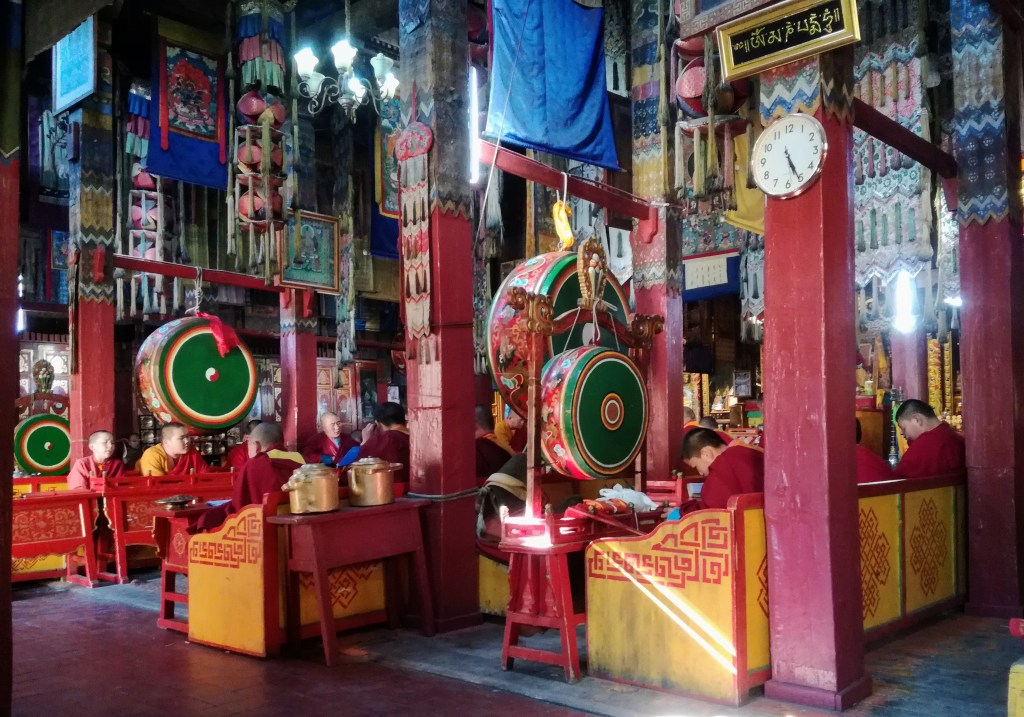
After your night of debauchery, head up to Mongolia’s biggest monastery, Gandantegchinlen. A cluster of temples, each more beautiful than the next, forms a large rectangle overlooking the city.
The first one I walked into was filled with monks chanting and singing. Their voices echoing throughout the room, transporting me, instantly, out and above the city. It is a very peaceful, and little visited complex, which is well worth a visit.
Go shopping at Naran Tuul Market
Traditional Mongolian tunics (del) and coats (huruum), saddles for horses or camels, leather boots and bags, carpets , shaman drums and everything you need to build your own yurt… You can find it all down the narrow, busy alleyways of this market.
Naran Tuul Market spreads out over a wide area, and you can spend several hours here shopping. Or, if you don’t have room for a saddle in your suitcase, simply admiring the handicrafts and soaking in the atmosphere. The market is dotted with food stalls too, so you can grab a khushuur, or meat pancake, if you get peckish.
Without a doubt, Naran Tuul is one of the best things to do in Ulaan Baatar. However, it is notorious for its pickpockets, so take care with your valuables.
Attend the Naadam Festival
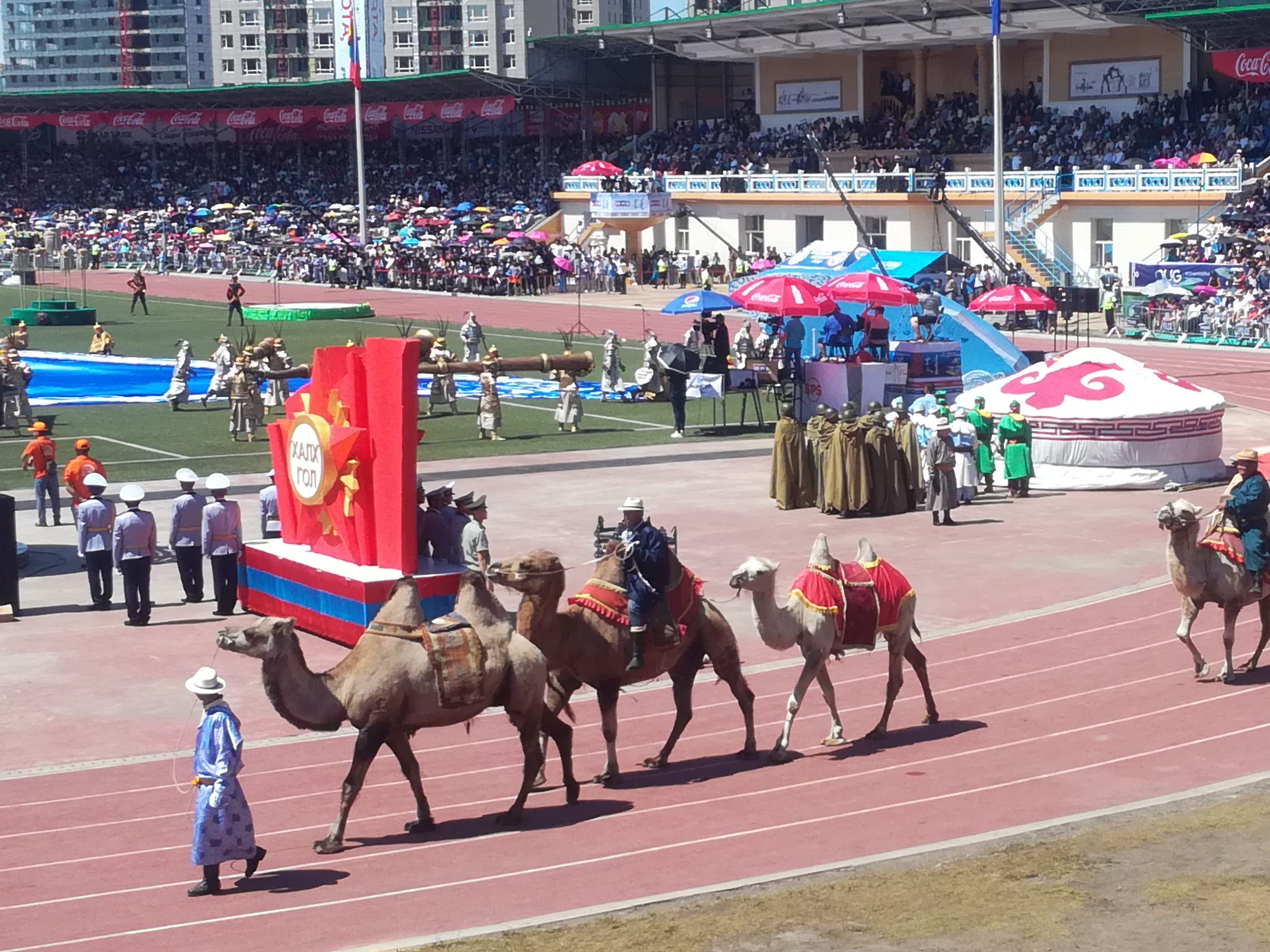
The biggest event of the year in Mongolia is the Naadam, a five-day festival that takes place in July. Short for eriin gurvan naadam, or the three games of men, the festival celebrates traditional nomadic culture.
The three main events are wrestling, archery and horse racing. Women are now allowed to compete in the latter two. Across the country competitions are held to find the best athletes. They then travel to Ulaan Bataar, to take part in the national celebrations.
It is a really fun event, that brings a festive energy and tons of animations to town. On the first day, people dress up in their finest traditional dress. They gather on Sükhbaatar square, to meet their friends and take pictures. The opening ceremony, which takes place in the town stadium, includes music, dance and acrobatics.
Around all events are stands selling food and vodka, and a lot of locals ready to party.
Get your fortune told in a shaman’s tent
The Centre of Shaman Eternal Heavenly Sophistication is a ger in a dirt lot, that looks underwhelming from the outside. Inside is like a cabinet of curiosities. It is filled with paintings, sculptures, shells, stuffed animals and seemingly random objects.
It is also home to a shaman, known for her ability to pass between the worlds. Shamanism has a long history in Mongolia. When Buddhism arrived from China, it mixed with pre-existing beliefs, to form the unique Mongolian Buddhist tradition that exists today.
Amongst the shamanic offerings of the Centre of Shaman Eternal Heavenly Sophistication are blessings, prayers and readings. If you want to know your future, this is the place. The shaman speaks only Mongolian, so bring a translator if you don’t know the language.
Discover incredible Mongolian fashion designers
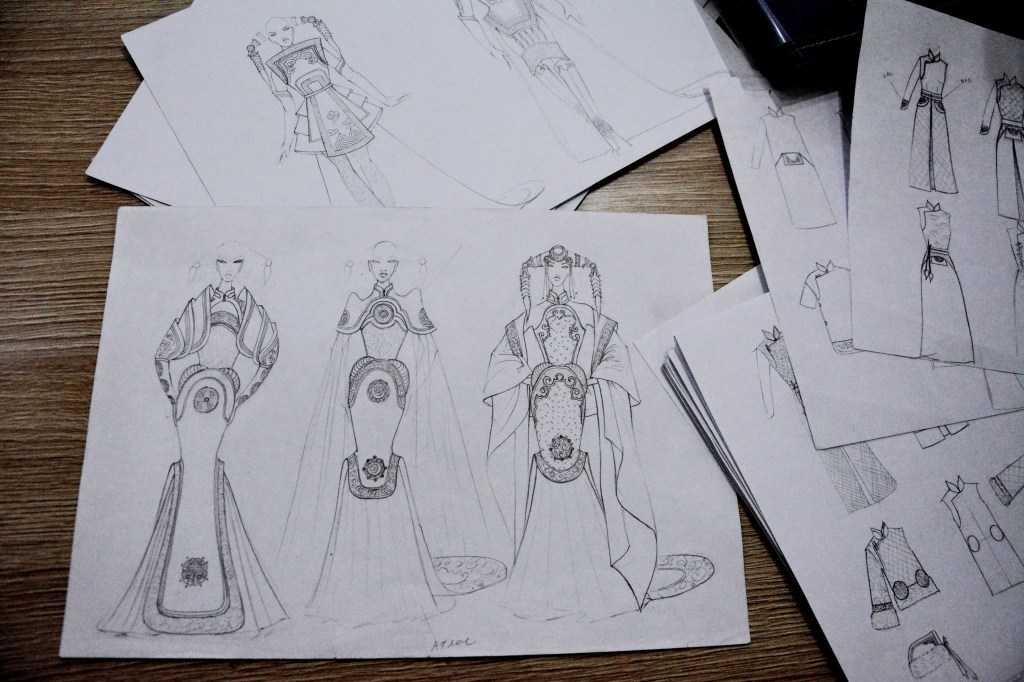
The first thing I noticed is that Mongolians are damn stylish. From punks with Mohawks to chic businessmen, from people in traditional dress to women in designer revamps of Mongolian costumes, I was amazed by the fashion I saw on the streets of UB.
Heading to the National Museum, I understood why. The impressive gallery of costumes portrays traditional dress from across the country, and the designs are out of this world. The use of colour and shapes and textiles would not be out of place on a catwalk.
There are loads of great designers in UB. Anyone interested in fashion should check out the boutiques spread around downtown.
Test Your IQ at the International Intellectual and Puzzle Museum
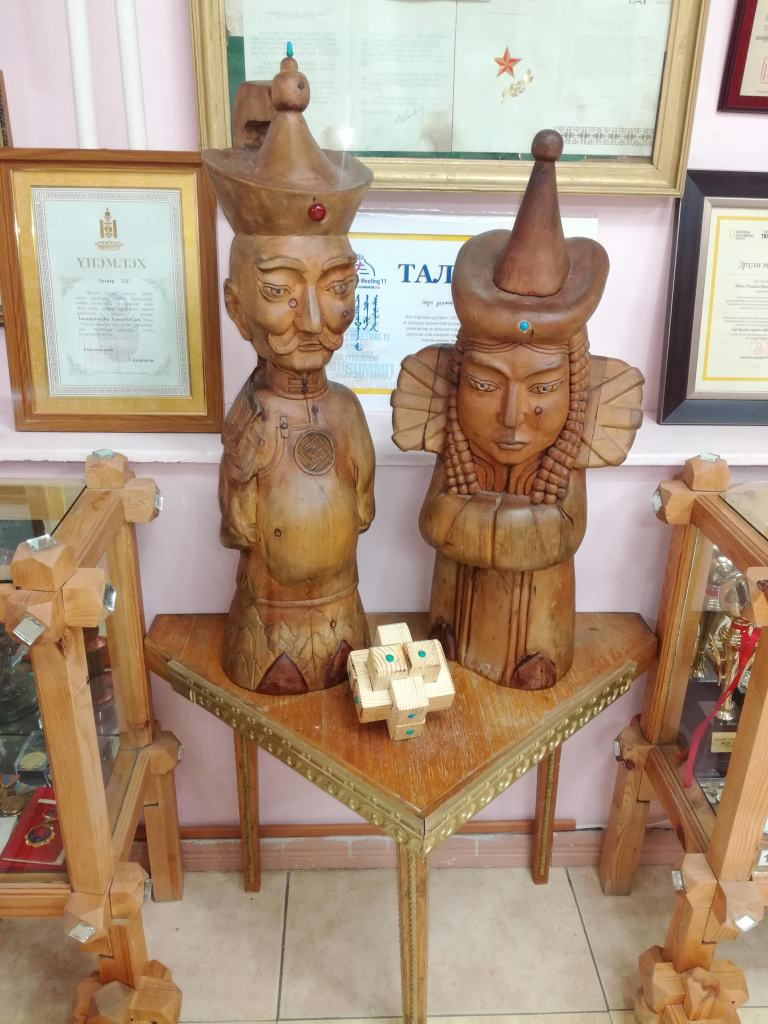
Mongolia has a long history of making puzzles, and this unique museum displays mind-boggles dating back to the Middle Ages. One wooden puzzle requires 56,831 movements to complete! You’ll see ancient chess boards, puzzle boxes and Mongolian equivalents of the Rubik’s cube. Many of them are works of art, with amazing sculpting, painting and inlays.
Entrance costs around 3.5 euros, and includes a tour with a wonderful English speaking guide, who brings life to the collections. She shows how some of the puzzles work, and even performs some magic tricks!
So in conclusion, is Ulaanbaatar worth visiting? Absolutely. Whether you want to meet shamans, DJs or puzzle-makers, you’ll find them all in Ulaan Baatar. I hope you love it as much as I did.
Ellie x
Other articles you might enjoy:
How to Always Have the Best City Breaks
 Shortcuts and Side Qests
Leave a comment