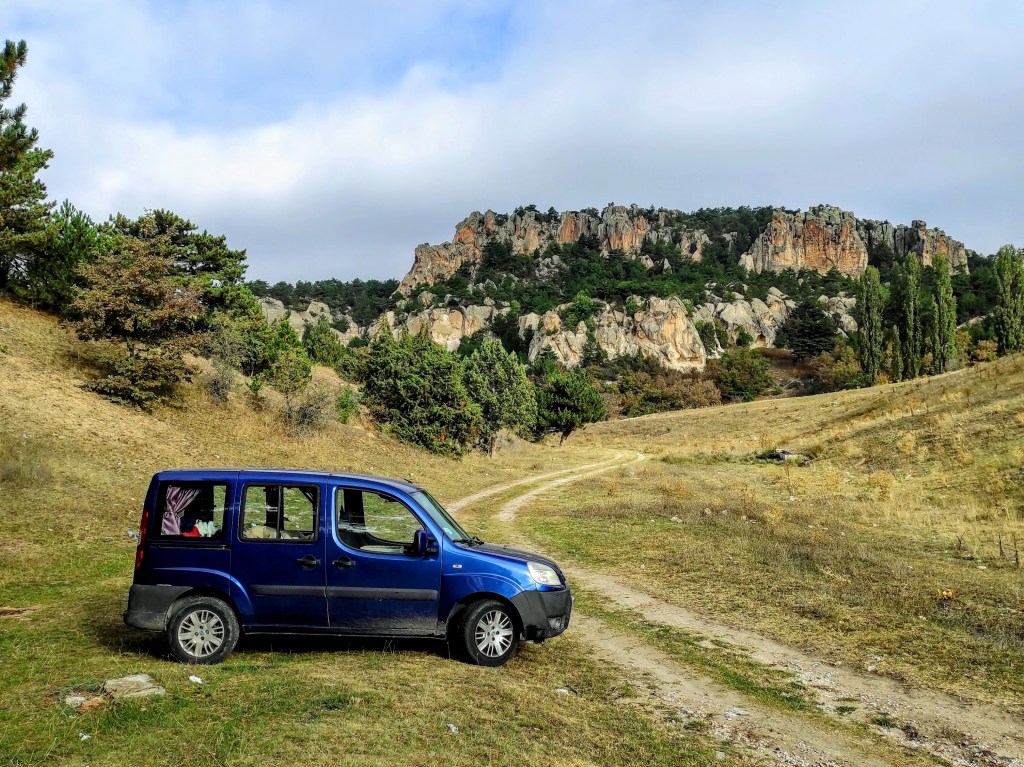
On a road trip from Bulgaria to Turkey, you’ll experience two continents, three millennia, and about four hundred roadside gözleme (Turkish flatbreads stuffed with delicious fillings).
Driving from Europe to Asia sounds pretty badass. In reality, you just cross a bridge. Istanbul straddles the two continents, an eternal in-between.
I spent two weeks driving from Bansko, in Bulgaria, to Antalya, and back again. I left the slowly frosting mountains for the 25 C sunshine days of Turkey’s Mediterranean coast. What I found along the way was a unique slice of culture. A gradual blending of as Europe into the Middle East.
It was also a fantastic way of getting between two great digital nomad destinations, Bansko and Antalya.
My Route: Driving from Bansko to Antalya
Starting Point: Bansko, Bulgaria
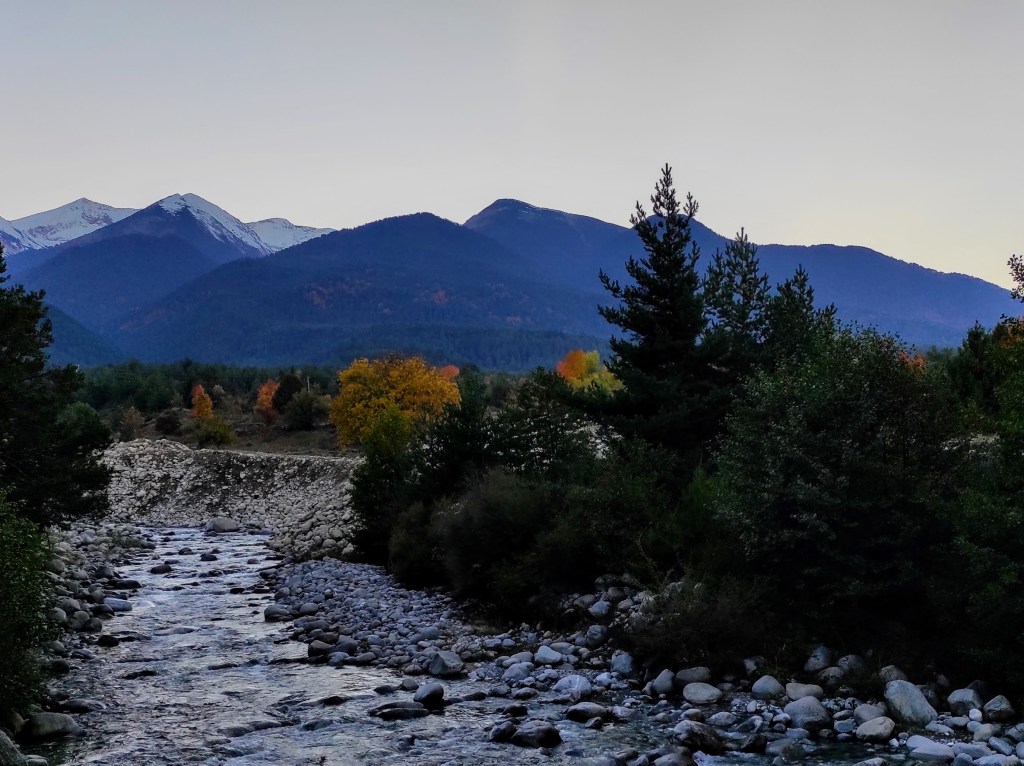
Bansko is a small mountain town with a ski resort and amazing hiking. In recent years, it has drawn in many digital nomads and expats from across the world. The mountains are beautiful, and the cost of living is affordable for anyone earning a Western European income.
Drive Through Southern Bulgaria
From Bansko, I drove through southern Bulgaria. Winding roads through narrow mountain valleys. Long flat stretches through fields, interspersed with villages, where the façades of houses left unplastered.
Many of the homes here are boarded up. Younger generations have left these settlements, which offer few opportunities. Older people cling on, tending to vegetable gardens and cattle.
From Bulgaria to Sofia by Road
After a few hours, I reached the border crossing to take me out of the EU. Traveling in this direction is relatively straightforward and speedy.
However, I see long queues of people coming in the other direction. This is one of the main routes taken by refugees from Syria or sub-Saharan Africa. People seeking better lives — or simply to stay alive — in Europe.
Their first impression of Europe must be disheartening. Seen from here, the EU looks like a fortress, built of bureaucracy and immigration guards.
Edirne, Thrace: Turkey’s Gateway City
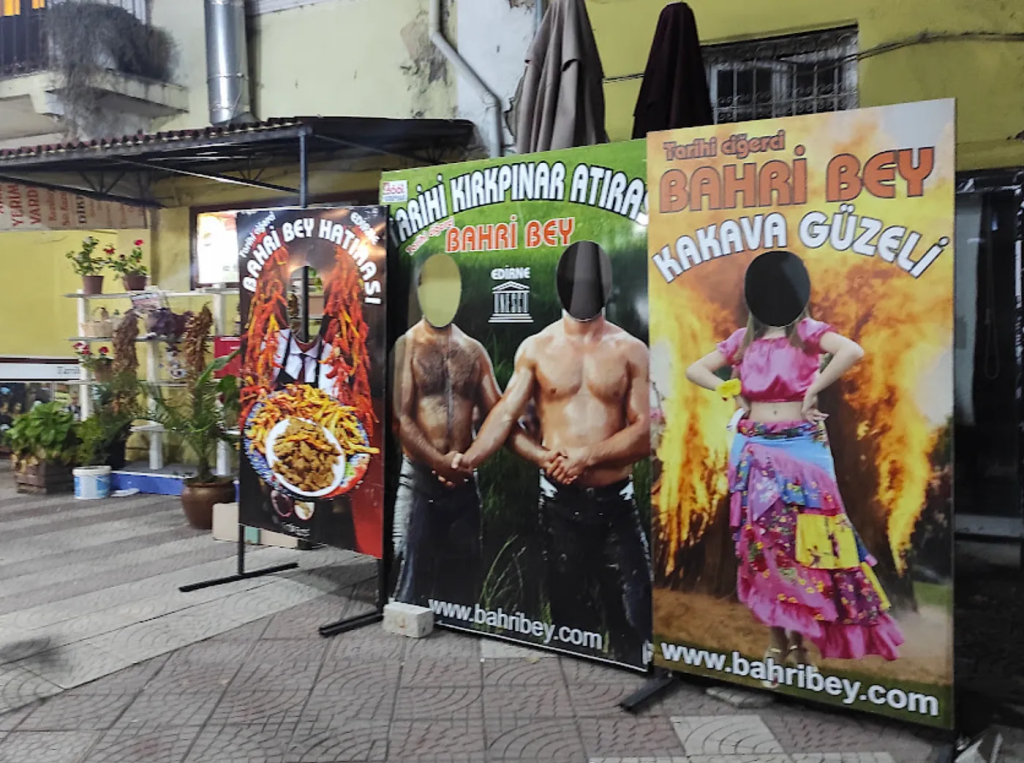
My first stop after the border is the city of Edirne, the epicenter of the European part of Turkey. This place is famous for two things.
One is the local dish of Edirne Cigeri. It is made of thinly slices calf liver deep-fried and eaten with crispy fried red chilies and yogurt.
The other is a yearly oil wrestling contest, which is semi-disguised homoerotism at its most slippery.
Edirne has a unique atmosphere. It is like a mixture of Bulgarian and Turkish cultures. It reflects the many decades when Bulgaria was under the rule of the Ottoman empire. Few travelers make it to this corner of Turkey, and yet it is a fascinating place.
Edirne boasts stunning architecture. An ancient marketplace surrounds the stunning Selimiye mosque, and the skyline is dotted with golden domes and minarets.
Eskişehir, Western Anatolia: An Urban Oasis

Eskişehir is a tribute to the power of local politicians to transform cities’ futures.
Mayor Yilmaz Buyukersen freed up the river of Eskişehir, and transformed it into a long, walkable promenade. It is cutesy, with twee bridges and a city beach.
Such a beautiful center is one of the reasons that Eskişehir has become known as one of Turkey’s happiest cities. It draws students from across the country.
It feels a bit like a theme park, with its pastel-color buildings and bridges, and neatly cropped grass. Still, the amazing restaurants and fun nightlife make it a pleasant place to stop as you drive down the country.
The Cave Cities of Phrygian Valley, Western Anatolia
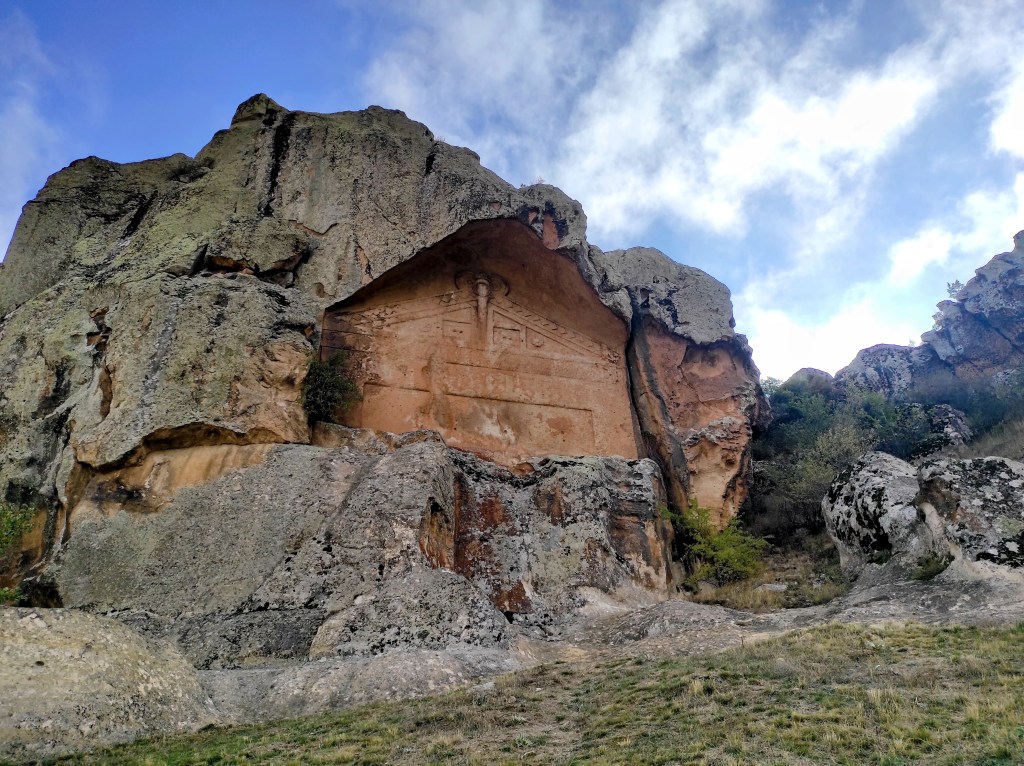
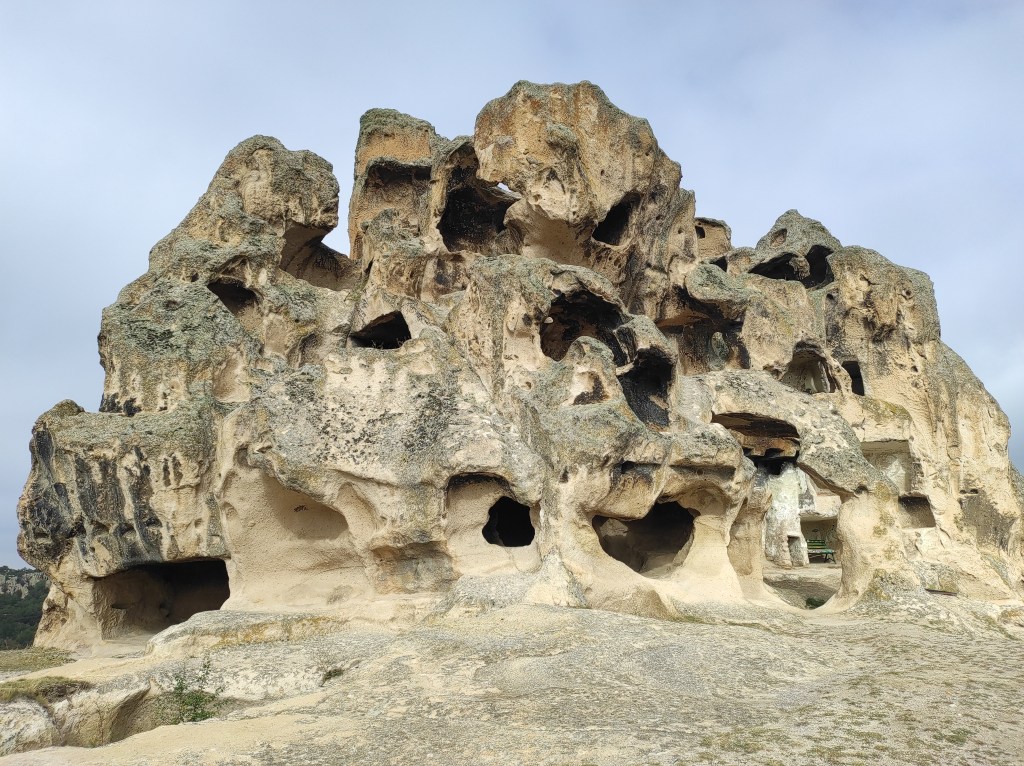
Driving out of Eskisehir, you soon reach a land of rolling fields and rocky outcrops. It leads to the site one of the country’s most ancient and overlooked ruins. Little is known about the Phrygians, a Thracian tribe that arrived in the region about 2000 BCE. They used an alphabet similar to Greek, and worshiped a mother goddess figure.
The landscape here is one of dry grass and weird rock formations. The Phrygians built their settlements high on hilltops, and from them you can see the neighbors clearly.
I loved this place, especially because I have a thing for troglodyte dwellings. Take a weird rock and make a castle out of it — genius! Aside from that, the landscapes themselves are wildly beautiful, and empty aside from these forgotten ruins and flocks of sheep.
Antalya, a city by the sea
Next, I came to Antalya, a large city on the coast. Antalya is a great place to stay for a few days, or weeks. It has a popular Coworking space (named Coworking Antalya), beaches on one side and mountains on the other.
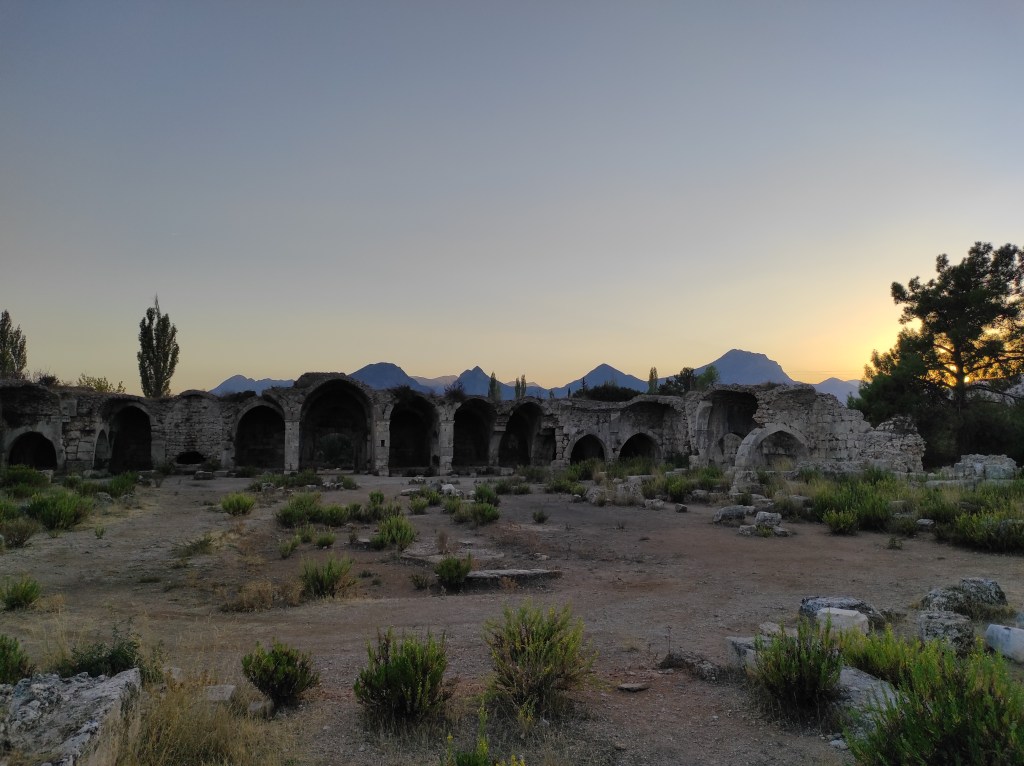
I didn’t linger for long, as I wasn’t feeling in the city mood. I did stop at this amazing ruined Caravanserai. Caravanserai are roadside inns where travelers and merchants used to spend the night along the silk road.
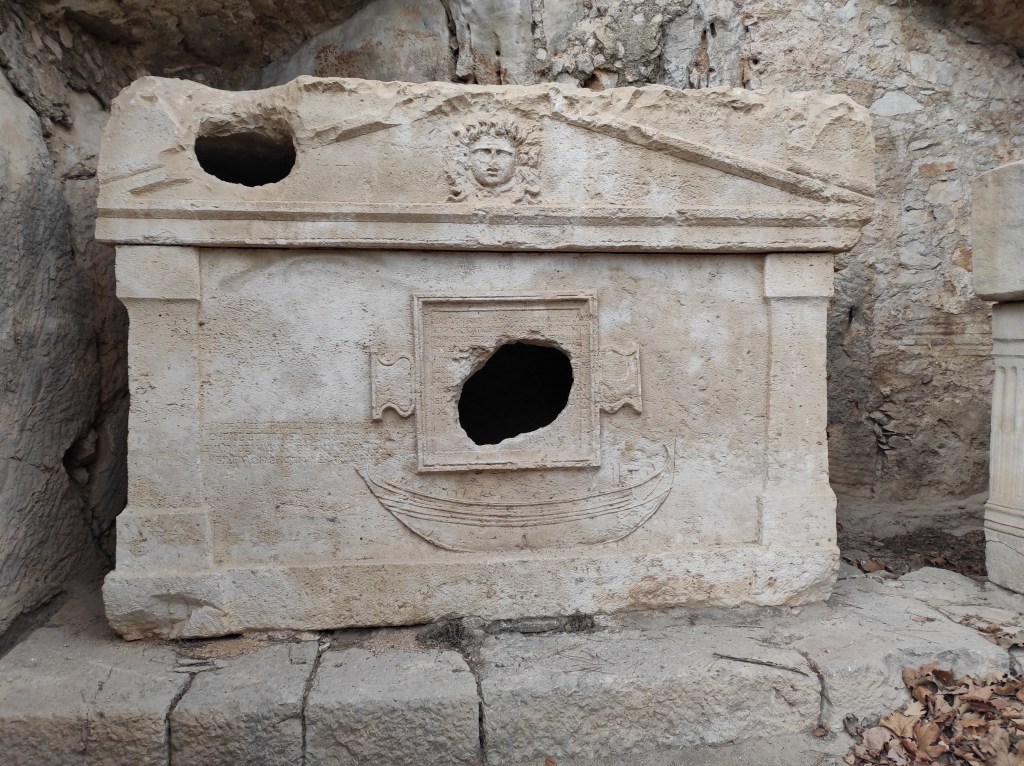
I also spent a day at the nearby Olympus ruins. Spread along a river and to the sea, these are the expansive remains of an old city. Very old. It was a Lycian city dating back to the 2nd century BCE.
One thing that surprises a lot of people about Turkey is that it has some of the finest Roman ruins in the world. Olympus is one such example.
Chimaera, a Mountain on Fire
My last stop turned out to be one of the most beautiful and spiritual places I have ever been. The eternally burning mountain of Chimaera. Flames dart out from under the rocks. Locals and tourists gather around these campfires that spring from the ground. It feels like magic. In reality, it comes from gas that seeps from the earth.
At night, you can see these fires from the sea.
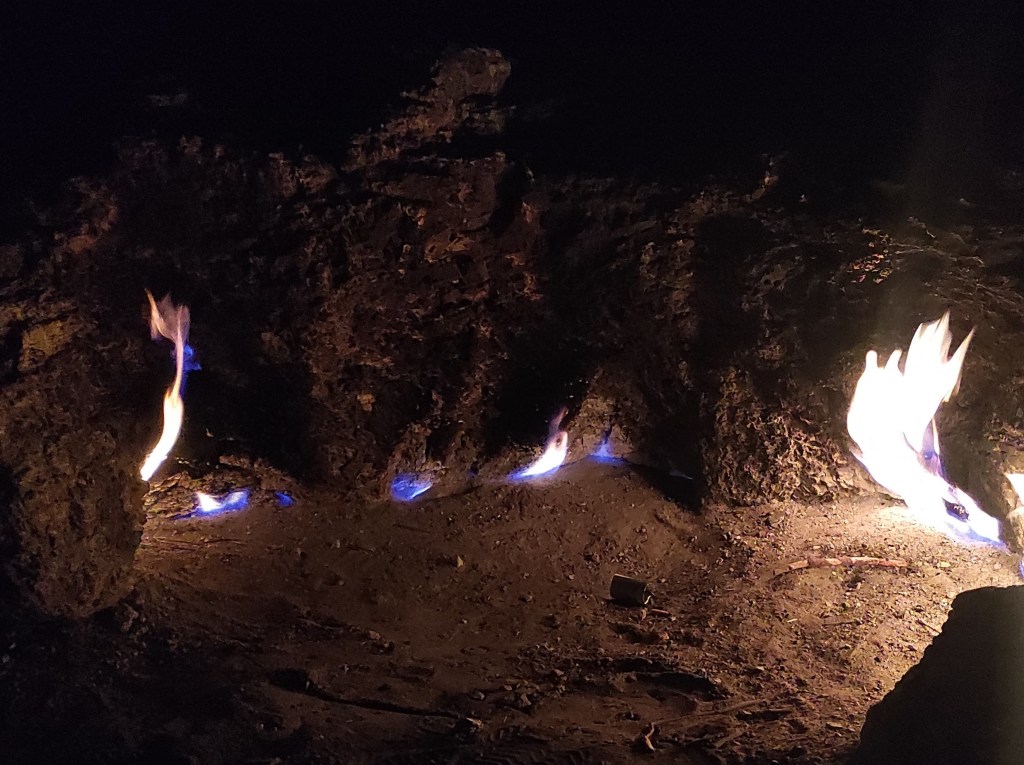
I was filled with awe, it was one of those rare tourist attractions that goes above and beyond expectations. It is easy to understand why, centuries and millennia ago, this site gave birth to many myths.
The Lycians used to believe the flames were made by a monster — part lion, part goat and part snake. A sort of hairy dragon-type figure — known as a Chimaera, hence the name.
I have now reached the southern coast of Turkey. It was time for some lazy beach days, before heading back up the Western coast to Istanbul.
A Guide to Traveling from Europe to Turkey Overland
If you are considering driving from Bulgaria to Turkey, my most important bit of advice is to do it. Many parts of both countries are hard to visit without your own vehicle. The drive will take you to places that few tourists get to see.
There is also not very much to plan. Citizens of most EU countries and the UK do not need a visa to travel to Turkey for less than 90 days in a 180-day period.
The border crossing is straightforward. All you need is your documents, your car papers and proof of insurance.
Car camping is very easy in Turkey. There are lots of places to park, and no one ever minds you spending the night. Although, as a solo female traveler, I did feel unsafe at times.The places I would park up were often the sort of places men gathered to drink in the evenings. This led to some unpleasant situations.
The only tricky bit of driving was through Istanbul, and that was a bad decision by me. I have a friend living in the city, so decided to drive right into the center to see her. It meant I got to park up and sleep with a view of the iconic Galatasaray. It also meant driving along seven lane highways and complex maze like traffic formations. Do not recommend!
Another big plus of driving to Turkey is that I was able to bring back some gorgeous things for my house. For once, I wasn’t limited in terms of the size of souvenirs.
Frequently Asked Questions: Traveling From Bulgaria to Turkey By Car
Can you drive from Bulgaria to Turkey?
Yes, land borders between Bulgaria and Turkey are open, and you can easily drive between the two. The main crossings include:
- Kapitan Andreevo – Kapıkule (near Svilengrad/Edirne) – the busiest and most commonly used crossing, open 24/7.
- Lesovo – Hamzabeyli – a good alternative to avoid long queues at Kapıkule.
- Malko Tarnovo – Dereköy – a smaller, scenic route through the Strandzha mountains, best suited for light vehicles.
How is crossing the land border from Bulgaria to Turkey ?
The land border crossing between Bulgaria and Turkey is well-maintained and busy. Expect customs checks, and potential delays during peak times. Traveling by car, bus, or train is common. Ensure all necessary documents, such as passports and visas, are in order.
Is the border crossing between Bulgaria and Turkey open?
Yes, the border crossing between Bulgaria and Turkey is open year-round. Operating hours are 24/7 at major checkpoints like Kapitan Andreevo–Kapıkule, which is where I crossed. Temporary closures can occur during holidays or due to specific regulations, so check local updates before traveling.
What do you need to cross overland from Bulgaria to Turkey?
To cross overland from Bulgaria to Turkey, you’ll need a valid passport, Turkish visa (if required), and vehicle documentation.
Where can I rent a car in Bulgaria?
Before having my own car in Bulgaria, I used to rent from Localrent. It aggregates local car rental companies, so prices are super affordable. Turn on the Crossborder Fee option to find cars you can take to Turkey.
Checklist for the Bulgaria-Turkey Border Crossing
- Do you have all your travel documents? This should include passports, visas (if needed), car documents and proof of insurance.
- Turkey has strict drug laws, and certain painkillers that are common in Europe and the UK might not be allowed. This includes co-codamol. If you are traveling with medication of any kind, check whether it is allowed across the border.
- Make sure you have good travel insurance, in case you have any health issues or encounter pick pockets on the road.
- Bring a good audiobook and lots of patience. As with any land border, the crossing between Bulgaria and Turkey can be unpredictable. If the border is short staffed, or particularly busy, you might be there for a while. It took only ten minutes for me to cross into Turkey.
Do you have a favorite overlanding route? Let me know in the comments!
Ellie x
Articles you might also enjoy:
From Bulgaria to Turkey By Car: An Overlander’s Guide
An Overlanding Adventure on the Georgian Military Road
 Shortcuts and Side Qests
Leave a comment